











How to Clean Leeks: A Step-by-Step Guide to Removing Dirt and Grit
Leeks are one of those vegetables that feel a bit fancy-but are actually super easy to cook with once you know how to prep them. They're part of the onion family, but have a much gentler flavour. I love using them in classics like Mussels in White Wine Cream Sauce, because they melt down into something sweet and savoury without ever overpowering the dish.

But here's the catch: they're basically dirt magnets. Because leeks grow in layers in sandy soil, they trap grit deep inside-and if you don't clean them properly, that dirt ends up in your food.
Whether you're making a classic pumpkin soup, cauliflower potato leek soup or using them as a flavour base as in this beetroot and red wine risotto, here's exactly how to clean leeks the easy way.
Jump to:
What Parts of the Leek Can You Use?
- White & pale green parts: These are the tender, sweet layers you want for most recipes - especially soups or even frittatas.
- Dark green tops: These are tougher and fibrous but packed with flavour. Save them for homemade stock or broth. Just rinse them well first and freeze if you don't plan to use them right away.
- Root ends: These get trimmed off, but some people regrow leeks by placing the root ends in water - fun for the kids!
Step-by-Step: The Easiest Way to Clean Leeks

Step 1: Trim the leeks
Cut off the root end and the tough dark green tops. Keep the white and pale green parts for your recipe.
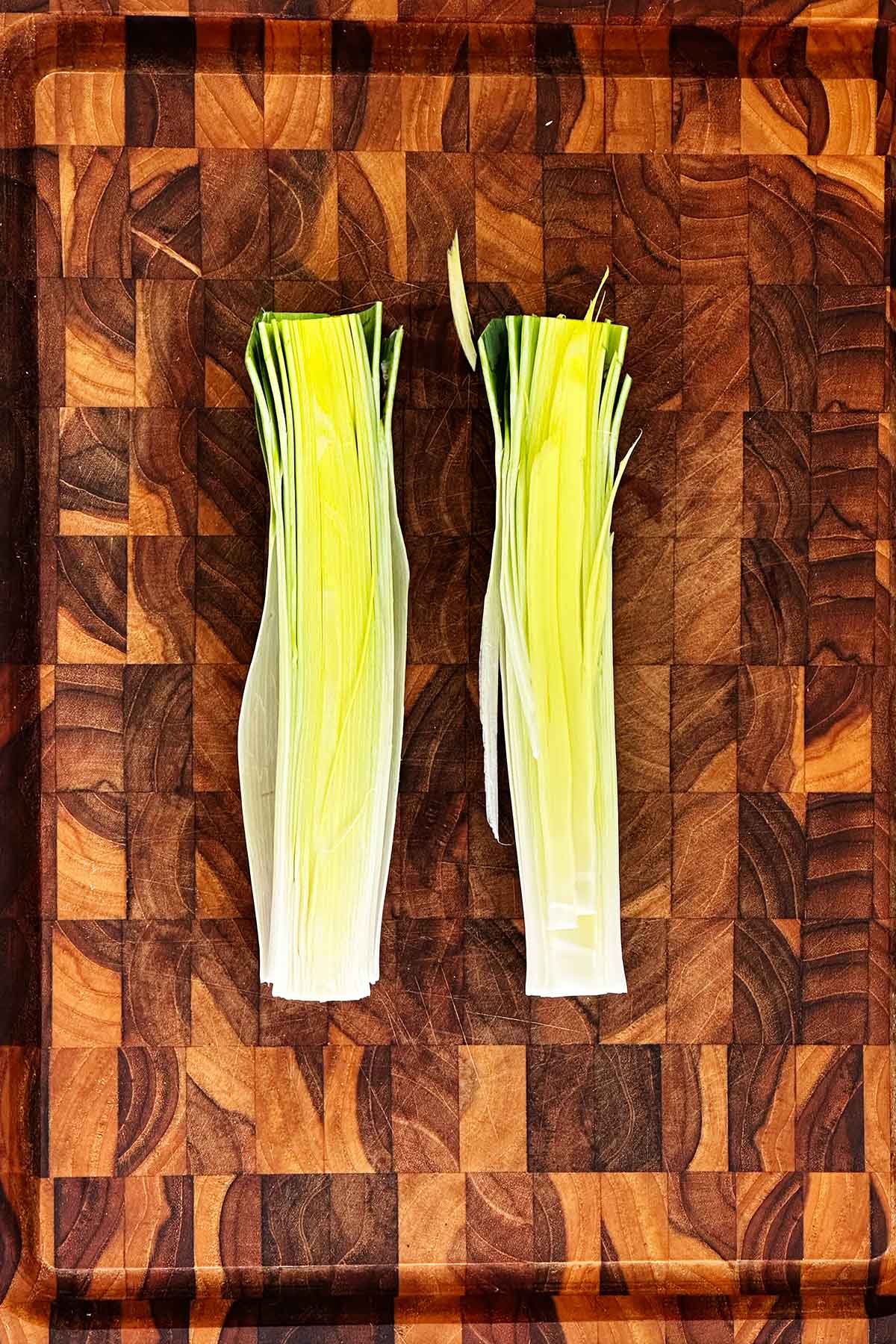
Step 2: Slice lengthwise
Cut each leek in half from top to bottom. This opens the layers and exposes hidden dirt inside the stalk.

Step 3: Rinse each half
Fan open each leek half under running cold water and gently rub to remove surface dirt between the layers.
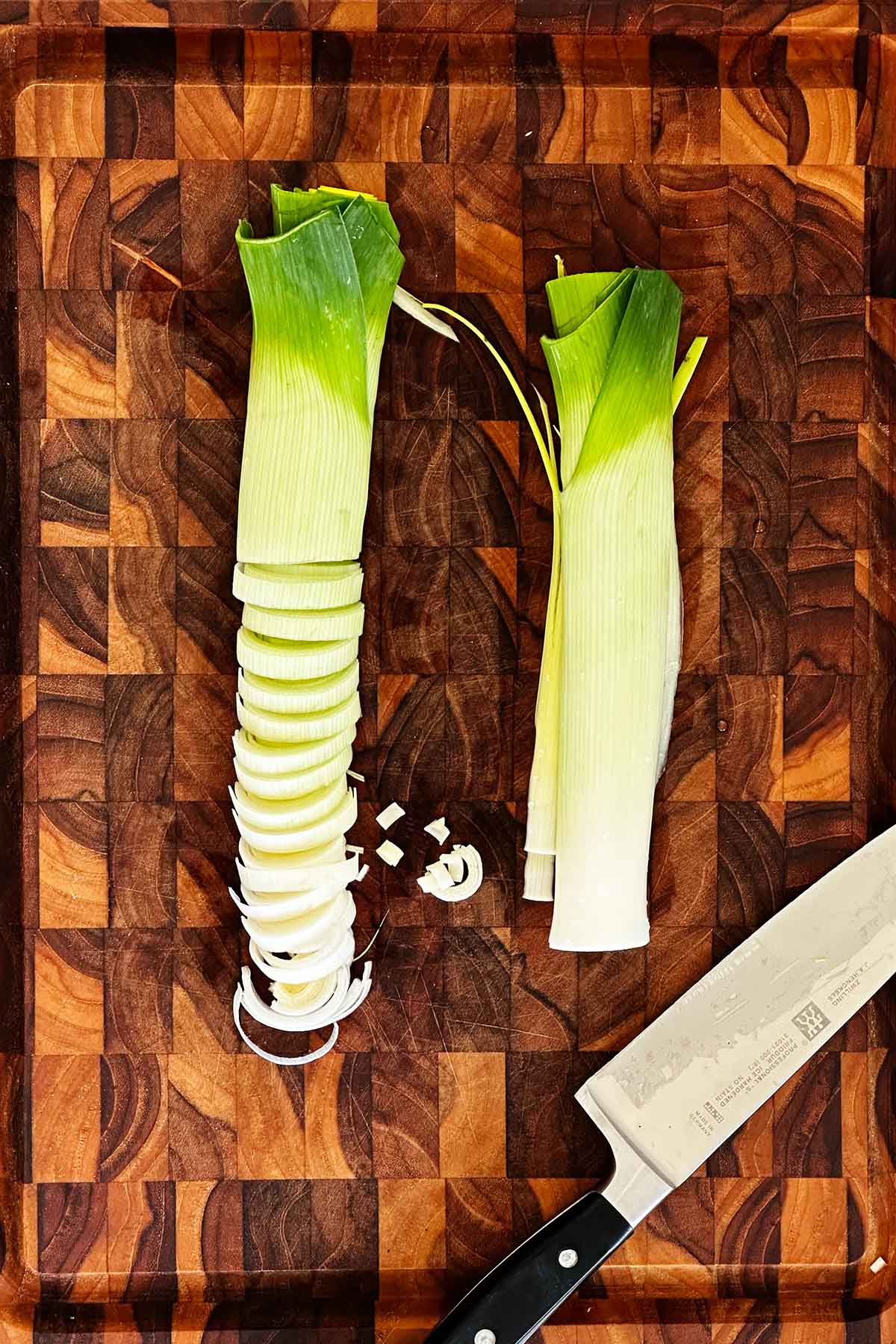
Step 4: Slice
Lay the halves flat on your board and slice across into thin half-moons, around ½ cm thick for soup use.
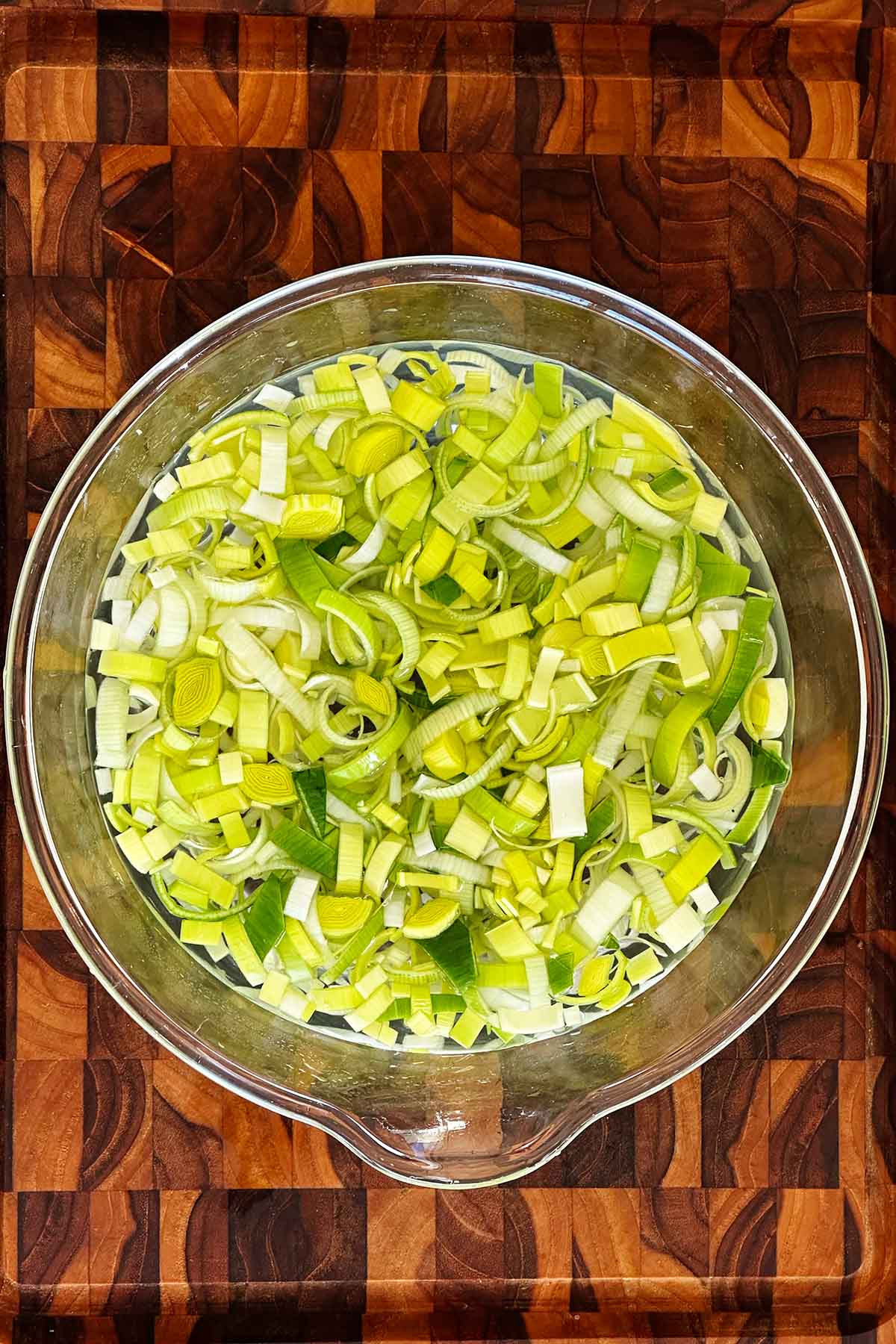
Step 5: Soak in cold water
Place sliced leeks in a bowl of cold water and swish well with your hands to dislodge any remaining grit.

Step 6: Lift with a sieve
Let the grit settle at the bottom. Use a sieve or slotted spoon to lift clean leeks out without pouring grit.
Equipment
Don't use a colander! If you tip everything out into a colander, all the dirt will just land back on the leeks. Instead, lift the clean leeks out with your hands or a sieve, leaving the grit behind.
Can You Clean Leeks Ahead of Time?
Yes! If you're doing meal prep or planning a big batch of soup, you can wash and slice leeks up to 3 days ahead. After soaking and draining them well, store the clean, dry leeks in an airtight container in the fridge. I like to give them a spin in a salad spinner or pat dry with a clean tea towel first-the moisture can make them slimy.
Why Do Leeks Have So Much Dirt in Them?
Leeks grow in sandy soil, and farmers often mound soil around the stalks as they grow taller (a process called "blanching") to keep the edible part pale and tender. That soil sneaks between all the tight layers, especially near the base. Even if your leeks look clean on the outside, there's often fine grit hidden inside.
And unlike onions, leeks don't have a protective papery skin to keep that dirt out. So it's not you-it's the leek. That's why soaking and swishing is so important.
Final Tip
Once you've cleaned leeks a few times, it becomes second nature-and trust me, it's worth it. No more gritty surprises in your soup, just that sweet, mellow leek flavour we all love.
FAQ
A quick rinse isn't enough. The grit gets inside the layers, so you really do need to slice and soak them.
Yes - even organic leeks grow in dirt! Organic doesn't mean grit-free.
You can, but they'll need longer to cook and may stay fibrous. They're best in blended soups or for making stock. I don't typically use it.
Favourite Recipes That Use Leeks
- Mussels in White Wine Cream Sauce with Leeks
- Dutch Oven Chicken Noodle Soup
- Beetroot and Red Wine Risotto