
Easy Vetkoek Without Yeast
Most vetkoek recipes start with yeast, a warm spot, and an hour of waiting. This one doesn't. This vetkoek recipe without yeast uses three things you already have: self-raising flour, an egg, and a pinch of salt. No proving, no kneading, no watching the clock.

I grew up on vetkoek, and I still make this 3 ingredient vetkoek when the craving hits and I can't be bothered with dough that needs babysitting. If you want the slow, traditional version, that's coming soon. But for a quick fix, this easy vetkoek without yeast is the one I reach for. Serve it alongside other South African recipes and you've got a proper spread.
Jump to:
- What is vetkoek?
- Quick look: Vetkoek with self-raising flour
- Summarise and save this recipe with:
- Why you'll love this easy vetkoek without yeast
- Ingredients for this quick vetkoek recipe
- Can you make vetkoek without yeast?
- Equipment
- How to make this easy vetkoek recipe
- Pro Tip:
- Why your vetkoek is raw in the middle (and how to fix it)
- A few more things that cause raw middles:
- Substitutions for vetkoek without yeast
- Serving ideas
- How to store vetkoek
- Top Tips
- FAQ
- South African treats
- Easy Vetkoek Without Yeast
What is vetkoek?
Vetkoek is a South African fried bread: a ball of dough deep-fried until golden and puffed, crisp outside and soft within. The name means "fat cake" in Afrikaans. You split it open and fill it with anything from curried mince to jam and cheese.
Quick look: Vetkoek with self-raising flour
- Prep time: 5 minutes
- Bake time: about 10 minutes per batch
- Total time: around 20 minutes
- Yield: about 5 vetkoeke (easily doubled)
- Method: Deep-frying
- Technique: Scoop and drop, no shaping needed
- Texture: Crisp golden shell, soft bread centre
- Difficulty: Dead simple
- Shelf life: Best fresh
Summarise and save this recipe with:
Why you'll love this easy vetkoek without yeast
- No yeast, no waiting: The self-raising flour does the lifting. You mix and fry. No proving bowl sitting on the counter for an hour. This is no yeast vetkoek at its simplest.
- Three pantry staples: Self-raising flour, egg, salt. That's the whole list. A genuine 3 ingredient vetkoek recipe with no special shop run, unlike versions built around Greek yoghurt.
- Faster than the traditional version: From bowl to plate in about 20 minutes. If you want the slow yeasted method, try the classic route instead, but this is the quick vetkoek recipe.
- A proper street-food feel at home: Vetkoek is basically a filling delivery system, so put your leftovers to work. Got bunny chow or bobotie leftovers sitting in the fridge? Spoon it into a split vetkoek and you've got a whole new meal in minutes.
Ingredients for this quick vetkoek recipe
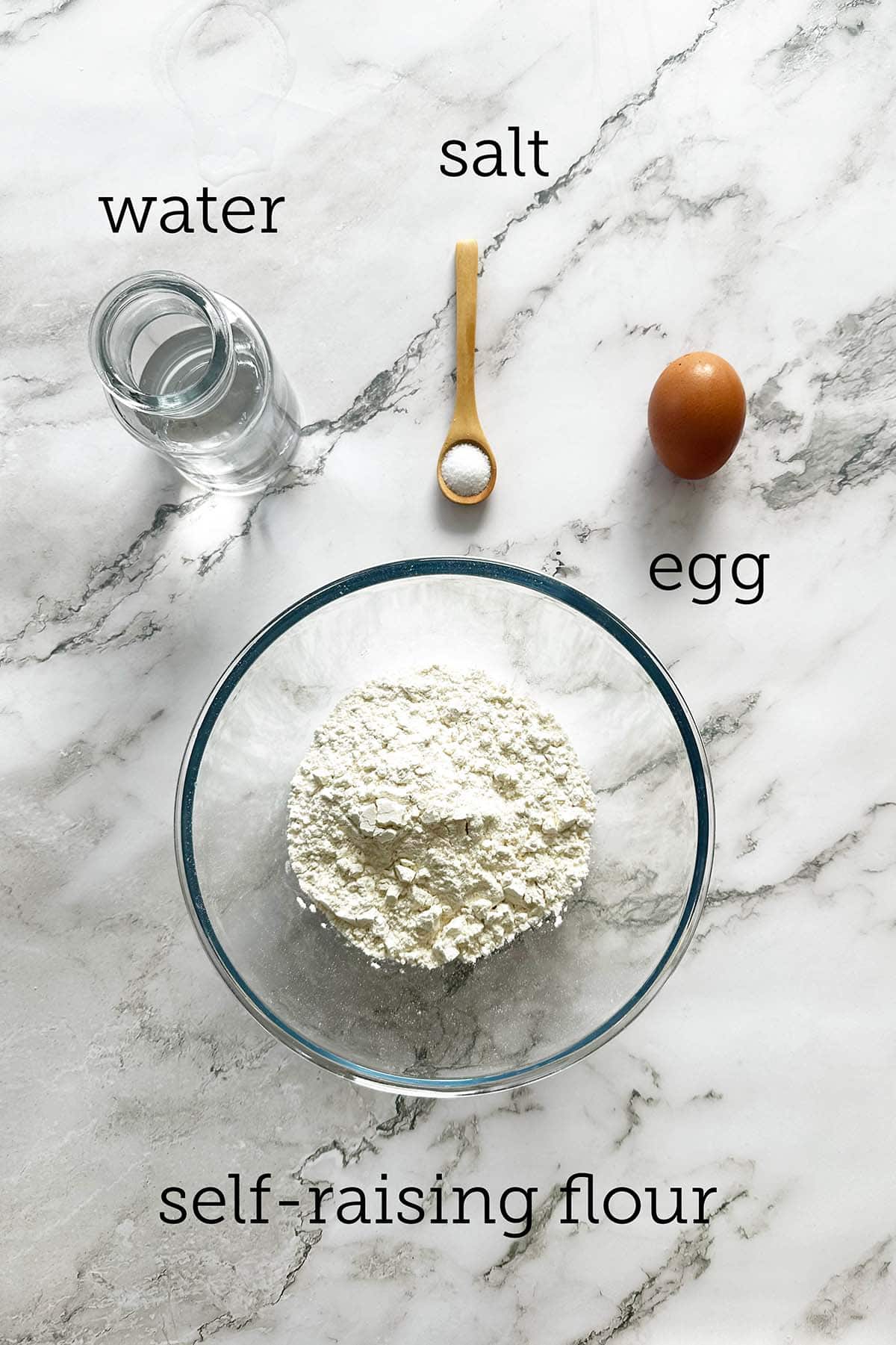
- Self-raising flour: This is what makes the no yeast vetkoek work. The raising agent is already in the flour, so the dough lifts in the hot oil on its own. This vetkoek with self raising flour needs nothing else to rise. If you only have plain flour, see the substitutions below.
- Egg: Binds the dough and adds a little richness, which helps the inside stay soft rather than dense. It's also the reason this works without a special ingredient run: everyone has an egg.
- Salt: Just enough to season. Without it the vetkoek tastes flat.
- Water: Brings everything together into a thick, soft dough.
See recipe card for quantities.
Can you make vetkoek without yeast?
Yes, you can make vetkoek without yeast. Self-raising flour already contains a raising agent, so it puffs the dough as it fries without any proving time. You won't get quite the same airy lift as a yeasted version, but you get soft, golden vetkoek with no yeast in a fraction of the time.
Equipment
Nothing fancy, but the right pot matters for an even fry.
- A Dutch oven or deep, heavy-based saucepan: A heavy base holds the heat steady when cold dough hits the hot oil. You also need depth, so the vetkoek can float and cook through. A shallow frying pan won't work here.
- A cooking thermometer: The most useful tool for vetkoek. It lets you hold the oil at a steady 180°C (350°F), the line between golden-and-cooked and burnt-but-raw.
- No thermometer? Do the dough test: Drop a small piece of dough into the oil. If it sizzles and turns golden in about 15 seconds, the heat is right. If it browns faster, the oil's too hot. Pull the pot off the heat for a minute, then start.
- An ice cream scoop: Quick, even portions and a neat round shape. A large spoon works too. Just spray it with a little oil so the dough slides off.
How to make this easy vetkoek recipe
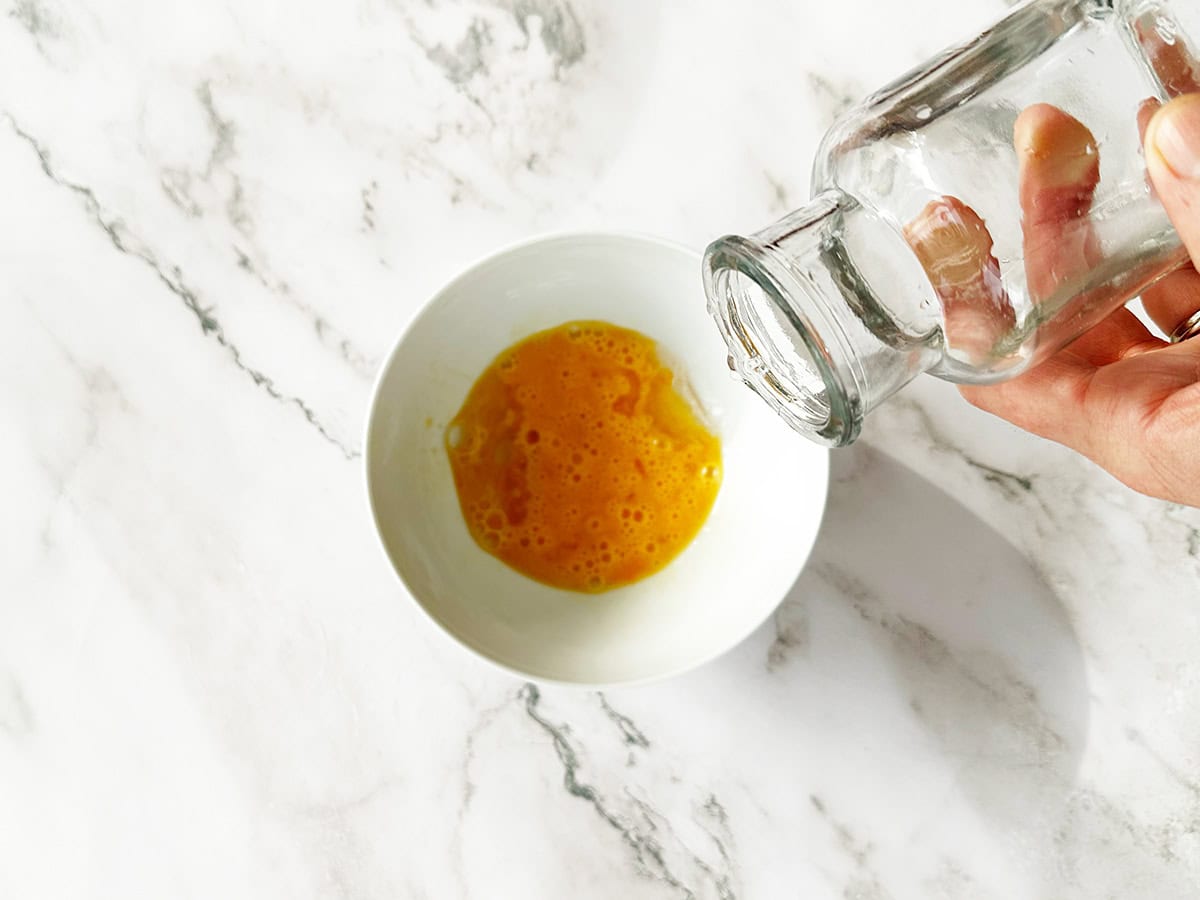
- Mix the wet ingredients. Whisk the egg, then add the water and whisk again until combined.
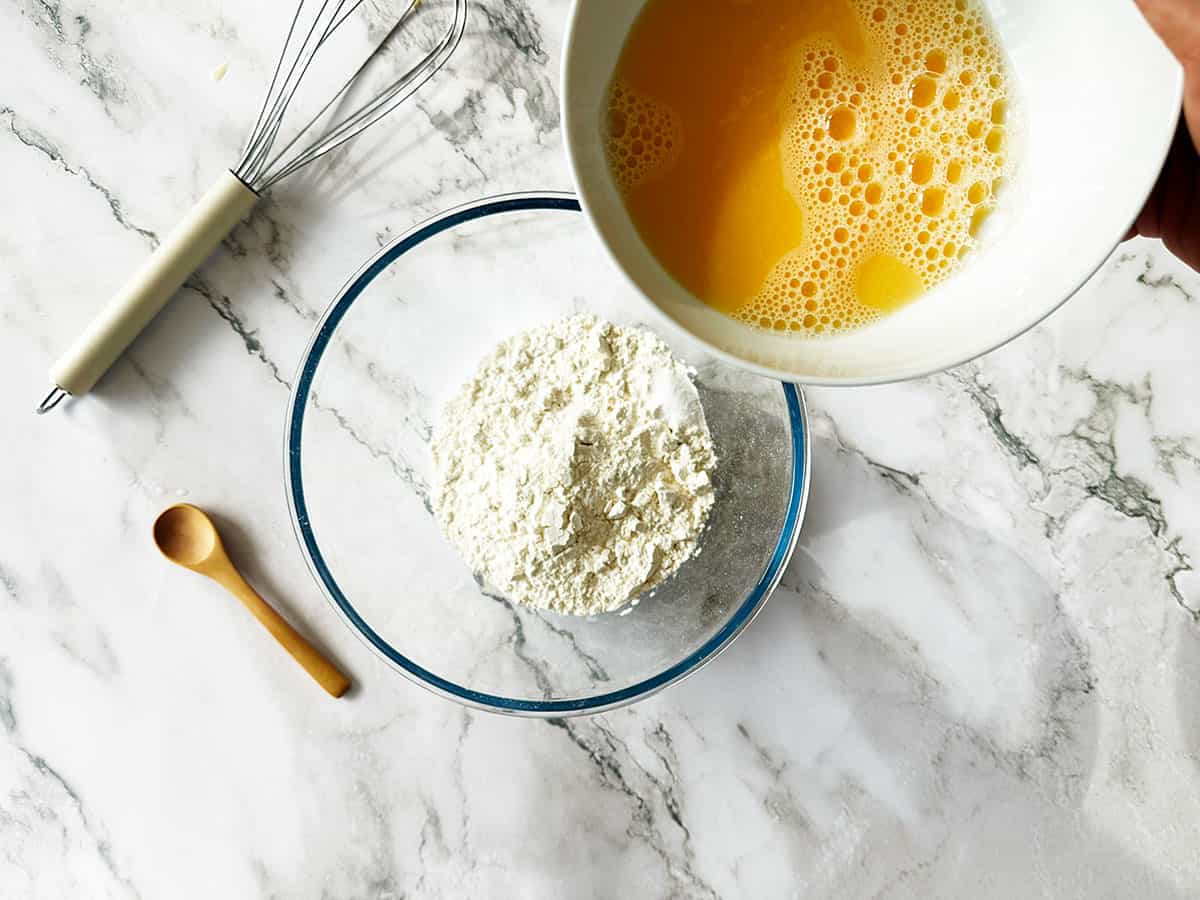
- Combine. Stir the salt through the flour, add the egg and water.
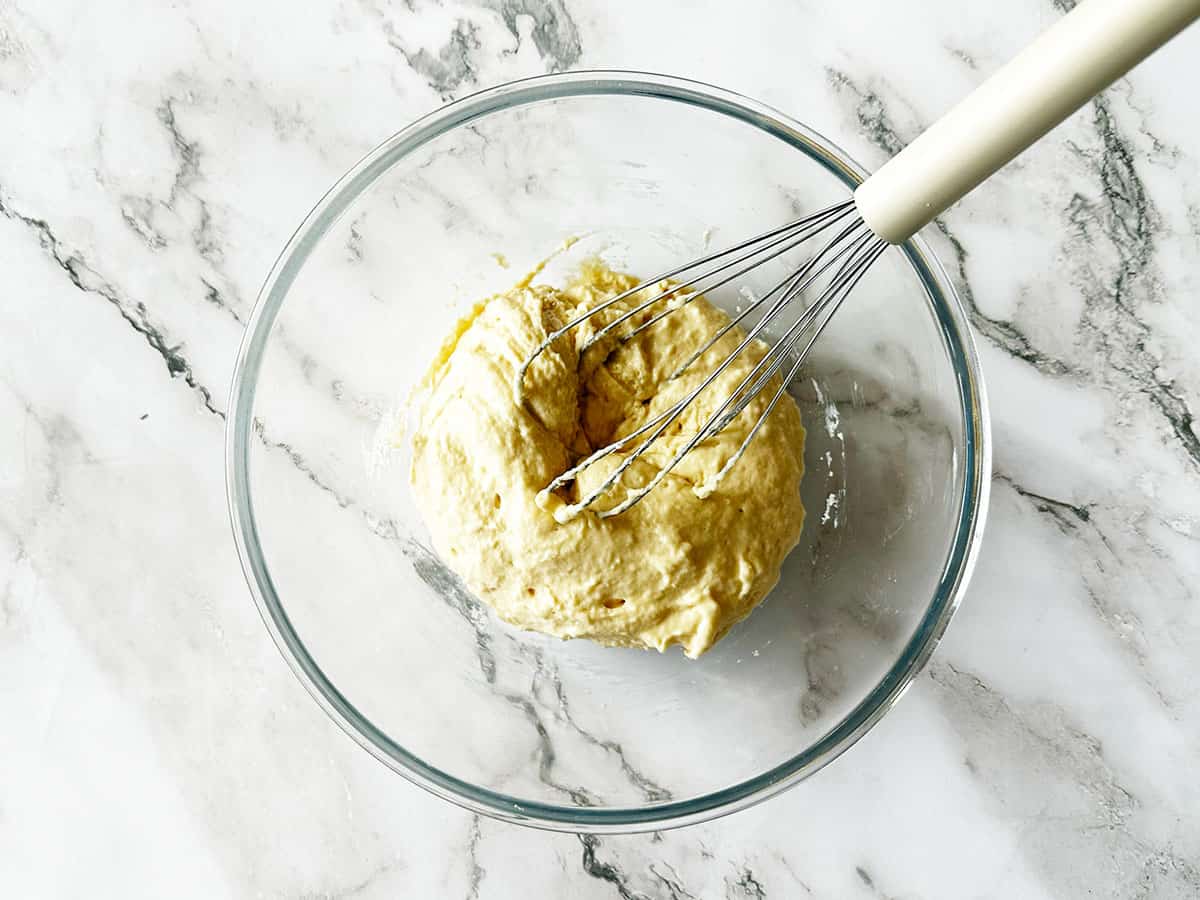
- Make the dough. Mix until it comes together into a thick, soft dough, somewhere between a batter and a bread dough.
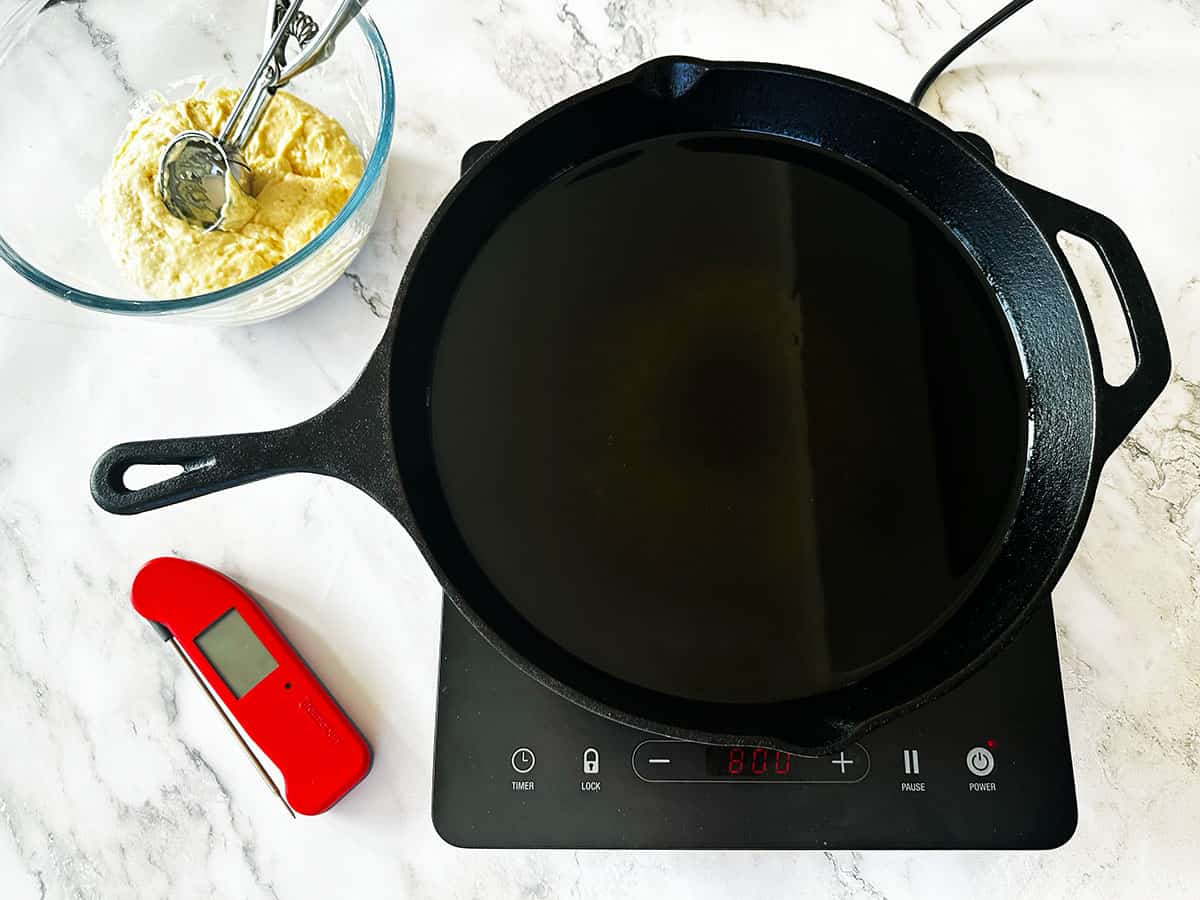
- Heat the oil. Bring the oil to about 180°C (350°F) in your heavy pot or pan. Get this right before the dough goes anywhere near it.
Pro Tip:
- Watch the oil temperature more than the clock. A steady 180°C (350°F) cooks the centre through before the outside burns. Low and patient beats hot and rushed here.
- Don't crowd the pan. Too many at once drops the oil temperature and you get greasy, pale vetkoek.
- Turn them every minute or so. They float, so the top needs flipping into the oil to cook evenly.
- This batch makes about 5. Double or triple it for a crowd: just keep the ratio of one egg and half a cup of water per cup of flour, and you can't go wrong.

- Scoop and drop. Spray an ice cream scoop with cooking oil spray so the dough doesn't stick, then drop scoops gently into the oil. Don't crowd the pan.

- Fry until golden. Turn each vetkoek every minute or so for an even cook. Fry until deep golden brown and cooked through, around 10 minutes. Drain.
Why your vetkoek is raw in the middle (and how to fix it)
Raw centres almost always come down to one thing: oil that's too hot.
- Oil is too hot. When the oil runs too hot, the outside browns fast while the inside stays cold and raw. It looks done, golden and crisp, but cut it open and the middle is still wet and doughy.
- The fix is temperature, not timing. Hold the oil at a steady 180°C (350°F). At that heat the shell browns at about the same rate the centre cooks, so when the outside is deep golden, the inside is set.
- No thermometer? Drop in a small piece of dough. It should turn golden in about 15 seconds. Faster than that means the oil's too hot, so pull the pot off the heat for a minute before carrying on.
A few more things that cause raw middles:
- Scoops too big. A giant ball of dough has further for the heat to travel to the centre. Keep them to roughly the size the ice cream scoop gives you. If you want larger vetkoek, fry them a little longer and a touch cooler.
- Crowding the pan. Too many at once drops the oil temperature sharply, so they sit and absorb oil instead of frying. They come out greasy and undercooked. Fry in batches with space around each one.
- Not turning them. Vetkoek float, so the top sits above the oil. Turn every minute or so, otherwise one side cooks while the other stays pale and raw.
If a batch does come out raw inside, you can rescue it: pop them in a 180°C (350°F) oven for 5 to 8 minutes to finish cooking the centre through.
Substitutions for vetkoek without yeast
- No self-raising flour? Use plain flour (all-purpose flour) and add 2 teaspoons of baking powder per cup of flour. This is the classic vetkoek recipe with baking powder approach, and it's why self raising flour vetkoek works in the first place: the flour is just plain flour with the baking powder already mixed in. Vetkoek made with baking powder rises the same way.
- Can you use cake flour? Cake flour is lower in protein and will give a softer, more tender result, but you'll need to add the raising agent yourself (the same 2 teaspoons of baking powder per cup). It works, it's just a slightly more delicate crumb.
- No egg? The egg binds and softens here, so leaving it out changes the texture noticeably. If you must, the dough will still fry, but expect a denser, more bread-roll interior.
Serving ideas
This is where vetkoek earns its keep. Split one open while it's still warm and go savoury with curried mince (a vetkoek and mince filling is the classic, and I'll link my full version once it's up), grated cheese, or leftover stew. Or go sweet with butter and golden syrup, apricot jam, or honey. A cup of rooibos on the side and you're sorted.
If you're in a South African street-food mood, swap the bread loaf in a bunny chow recipe for a split vetkoek and eat that curry straight out of the fried bread instead.
How to store vetkoek
Honestly? Don't. Vetkoek is meant to be eaten the moment it comes out of the oil.
- Eat them fresh and warm: That's the whole point. Crisp shell, soft inside. They go sad and soft within an hour.
- Small batch on purpose: This recipe makes about 5. It's a fresh-cook portion, not a meal-prep job.
- Feeding more? Double or triple the batch and fry straight through. Still eat them warm.
- If you really must keep one: Airtight container at room temp for a day. Reheat in a 180°C (350°F) oven for 5 to 8 minutes to bring back some crisp. Fresh is still better.
Top Tips
- This batch makes about 5. Double or triple it for a crowd: just keep the ratio of one egg and half a cup of water per cup of flour, and you can't go wrong.
FAQ
Mix self-raising flour with salt, then stir in a whisked egg and water to form a thick, soft dough. Scoop spoonfuls into oil heated to 180°C (350°F) and fry, turning often, until deep golden and cooked through, about 10 minutes. The self-raising flour replaces the yeast.
Yes. Self-raising flour is the easiest way to make vetkoek with no yeast because the raising agent is already in the flour. The dough puffs as it fries, no proving needed. It's the base of this whole recipe.
Yes. If you only have plain flour, add 2 teaspoons of baking powder per cup of flour. That's all self-raising flour is anyway. A vetkoek recipe with baking powder rises and fries exactly the same way.
You can, but cake flour is lower in protein, so you'll get a softer, more delicate crumb. Add 2 teaspoons of baking powder per cup since cake flour isn't self-raising. The result is tender but a little less sturdy for filling.
Vetkoek means "fat cake" in Afrikaans. It's a South African deep-fried bread, crisp on the outside and soft inside, split open and filled with savoury or sweet toppings. Some people call it magwinya.
South African treats
Looking for other recipes like this vetkoek? Try these:

If you make this 3 ingredients vetkoek recipe, please leave a 🌟 star rating and a comment below to let me know how it turned out. And if you love it, save it to your favourite Pinterest board so you've always got the recipe to hand.
Print
Easy Vetkoek Without Yeast
- Total Time: 20 minutes
- Yield: 5 1x
Description
Vetkoek without yeast means no proving and no waiting. You just whisk, mix, and fry. This batch makes about 5, and it doubles easily for a bigger crowd. Crispy golden outside, soft inside, and on the table fast.
Ingredients
1 egg
1 cup (150 g) self-raising flour
½ tsp salt
½ cup (125 ml) water
Oil, for deep frying
 Get Recipe Ingredients
Instructions
- Whisk the egg: Whisk the egg, then add the water and whisk together.
- Mix the dough: In a separate bowl, combine the self-raising flour and salt. Add the egg and water mixture and mix until it forms a stiff but soft dough, thick but still a little loose.
- Heat the oil: Bring enough oil for deep frying to about 180°C (350°F) in a heavy-based pan such as cast iron. Keep it at this temperature: too hot and the vetkoek will burn outside while staying raw in the middle (note 1).
- Scoop and drop: Spray an ice cream scoop with cooking oil spray so the dough doesn't stick, then drop scoops of dough into the oil.
- Fry: Fry until deep golden brown and cooked through, turning every minute or so for an even cook. This takes about 10 minutes.
- Drain: Lift the vetkoek out with a slotted spoon and drain on paper towel.
- Serve: Serve warm.
Notes
Oil temperature is the key to getting these right. If it runs too hot, the outside browns before the inside is cooked through, leaving them raw in the middle.
- Prep Time: 10
- Cook Time: 10
- Category: Bread
- Method: Deep frying
- Cuisine: South African
Nutrition
- Serving Size:
- Calories: 151
- Sugar: 0.1 g
- Sodium: 545.9 mg
- Fat: 6.8 g
- Carbohydrates: 18.6 g
- Protein: 3.7 g
- Cholesterol: 37.2 mg