



Seed Rusks (Healthy Wholewheat Brown Rusk Recipe)
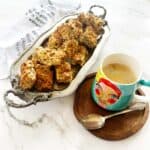
These are the kind of rusks you make when you want proper crunch, a bit of nuttiness, and that hearty wholegrain thing happening. This seeded rusk recipe uses wholewheat flour, bran, and three seeds for a healthy rusk that's actually worth dunking into your coffee.

I've been making a version of these for a while now and they're the ones that disappear fastest. Something about that mix of toasted seeds and wholegrain flavour. They're not delicate, and that's the whole point. If you'd like a bran rusk without seeds, try my All Bran rusks recipe instead - same buttermilk base, but built around All-Bran flakes.
Jump to:
- Why you'll love these seed rusks
- The seeds - what each one does
- Why use wholewheat flour?
- Ingredients for this seed rusk recipe
- Seed toasting - optional but recommended
- Instructions
- Substitutions
- Four seeds variation
- Equipment
- Storage
- Top Tips
- More South African rusk recipes
- FAQ
- Related
- Seed Rusks (Healthy Wholewheat Brown Rusk Recipe)
Why you'll love these seed rusks
- Properly crunchy with loads of texture from the seeds.
- One bowl for dry, one for wet, mix, bake, dry. That's it.
- Genuinely healthy seed rusks - high fibre from the wholewheat flour and bran.
- Keeps for up to a month in an airtight container.
- Easy to make as three seed rusks or four seed rusks depending on what you have.
- A solid healthy rusk recipe that doesn't taste like cardboard.
The seeds - what each one does
Each seed brings something different to these nutty seed rusks:
- Sunflower seeds - bulk and crunch. They're the biggest seed in the mix and give you that satisfying bite when you snap a rusk in half.
- Sesame seeds - nutty, almost toasty flavour that deepens when they bake. Small but they pack in flavour.
- Linseed (flaxseed) - the nutrition one. High in omega-3 and fibre, with a slightly earthy taste. Also helps bind the dough a little.
- Poppy seeds (optional, for four seed version) - add 60g for subtle crunch and a slightly sweet, nutty note. More on this in the variation section below.
Why use wholewheat flour?
The wholewheat flour is what makes these wholewheat rusks darker and heartier than regular ones. You'll notice they're browner than your classic buttermilk rusks - proper brown rusks with a denser crumb.
Wholewheat flour (also called wholemeal flour, same thing) absorbs more liquid than white flour, so the dough is heavier. That's normal. It also means more fibre and a nuttier flavour, which is why the seeds and the flour complement each other so well.
This whole wheat rusk recipe uses a mix of self-raising flour and wholewheat flour rather than going 100% wholemeal, so you still get a good rise without ending up with a brick.
Ingredients for this seed rusk recipe
The full ingredient list is in the recipe card below. Here are the key notes:
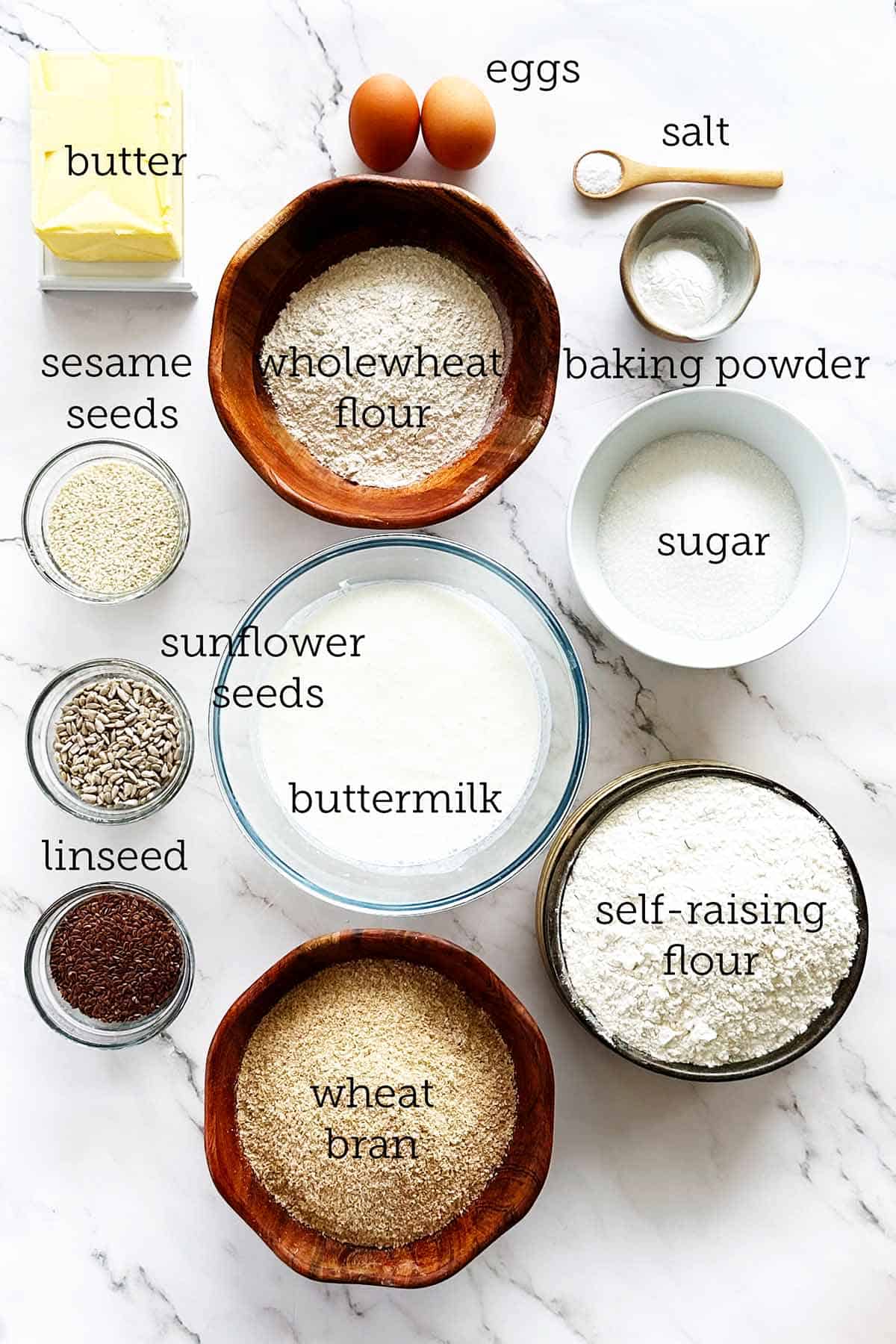
- Self-raising flour - does the heavy lifting for structure.
- Wheat bran - a big part of this recipe. It's what makes these wholewheat seed rusks high fibre and gives them that slightly rough, rustic texture. Use wheat bran, not oat bran.
- Wholewheat flour - adds colour, depth, and extra fibre. Turns it into brown rusks.
- Sesame seeds, linseed, sunflower seeds - a generous amount. You'll see them through every slice.
- Sugar - balances the nuttiness. You can drop it to 200 ml for a less sweet rusk.
- Buttermilk - keeps things moist and adds a slight tang.
- Butter - this is what makes them rich enough to actually enjoy.
- Eggs - for binding.
- Baking powder and salt - the basics.
Seed toasting - optional but recommended
Toast your sesame seeds and sunflower seeds in a dry pan over medium heat for 2-3 minutes, just until they smell nutty and go slightly golden. Let them cool before adding to the dry mix.
It deepens the flavour noticeably. If you've got 3 spare minutes, it's worth it.
Instructions
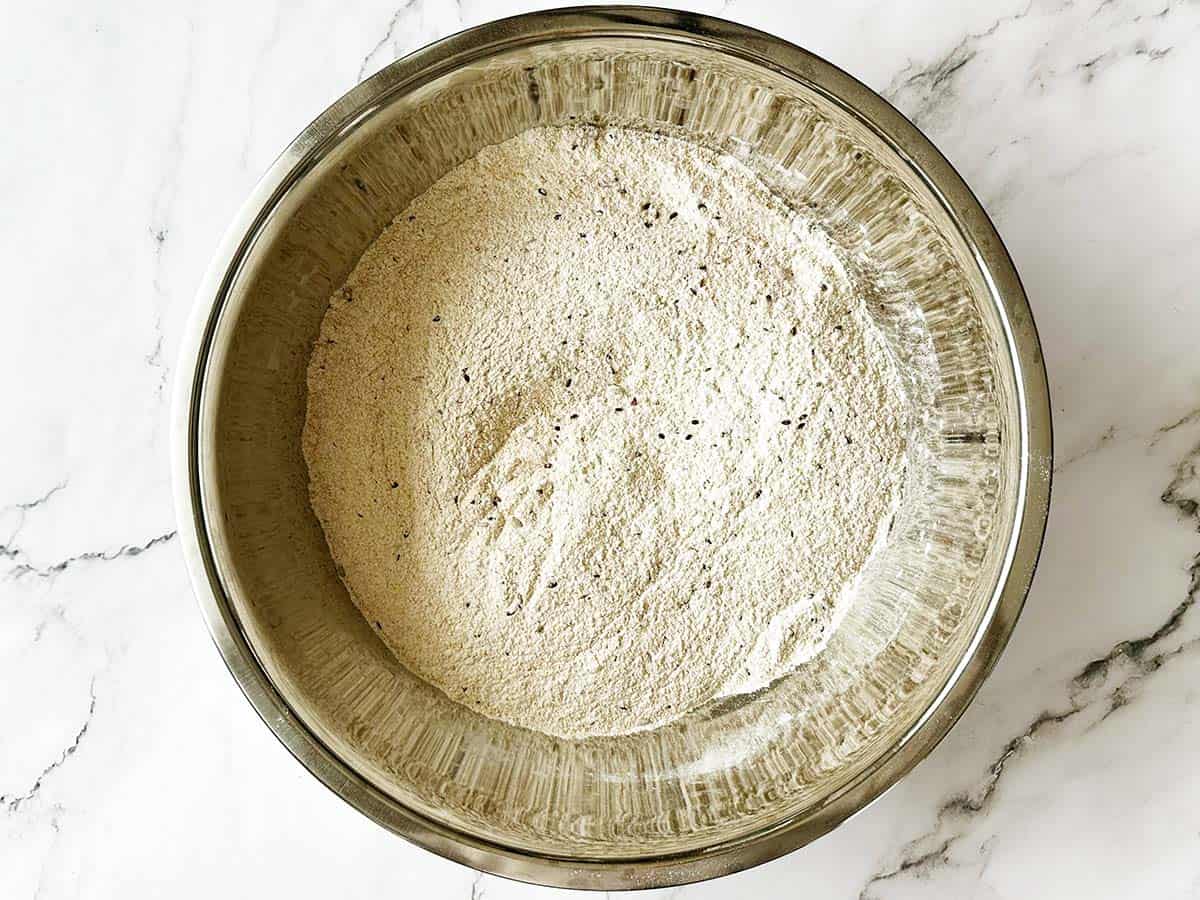
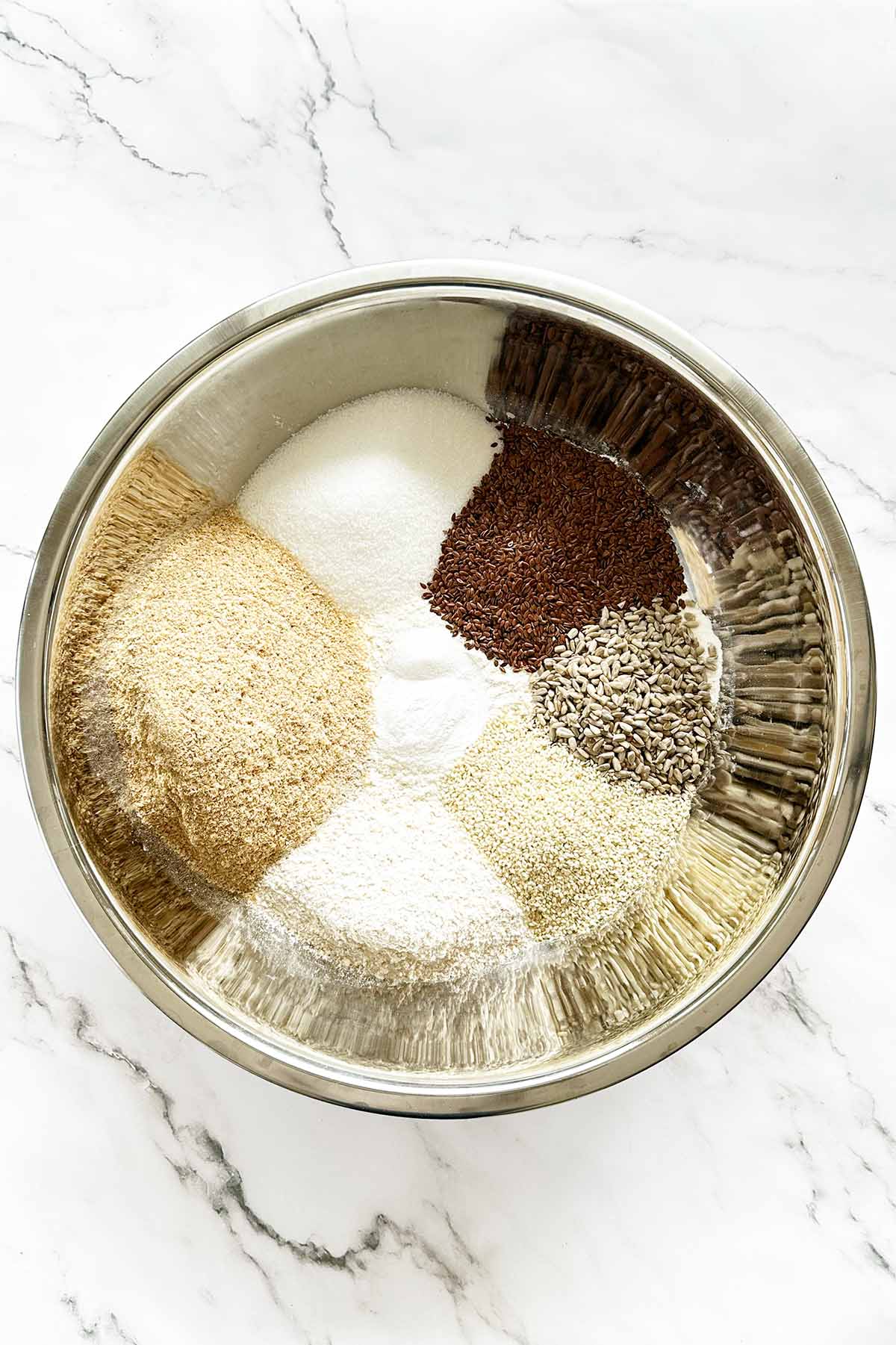
- Mix the dry ingredients. Combine the dry ingredients in a large bowl. Mix so the seeds are evenly distributed.
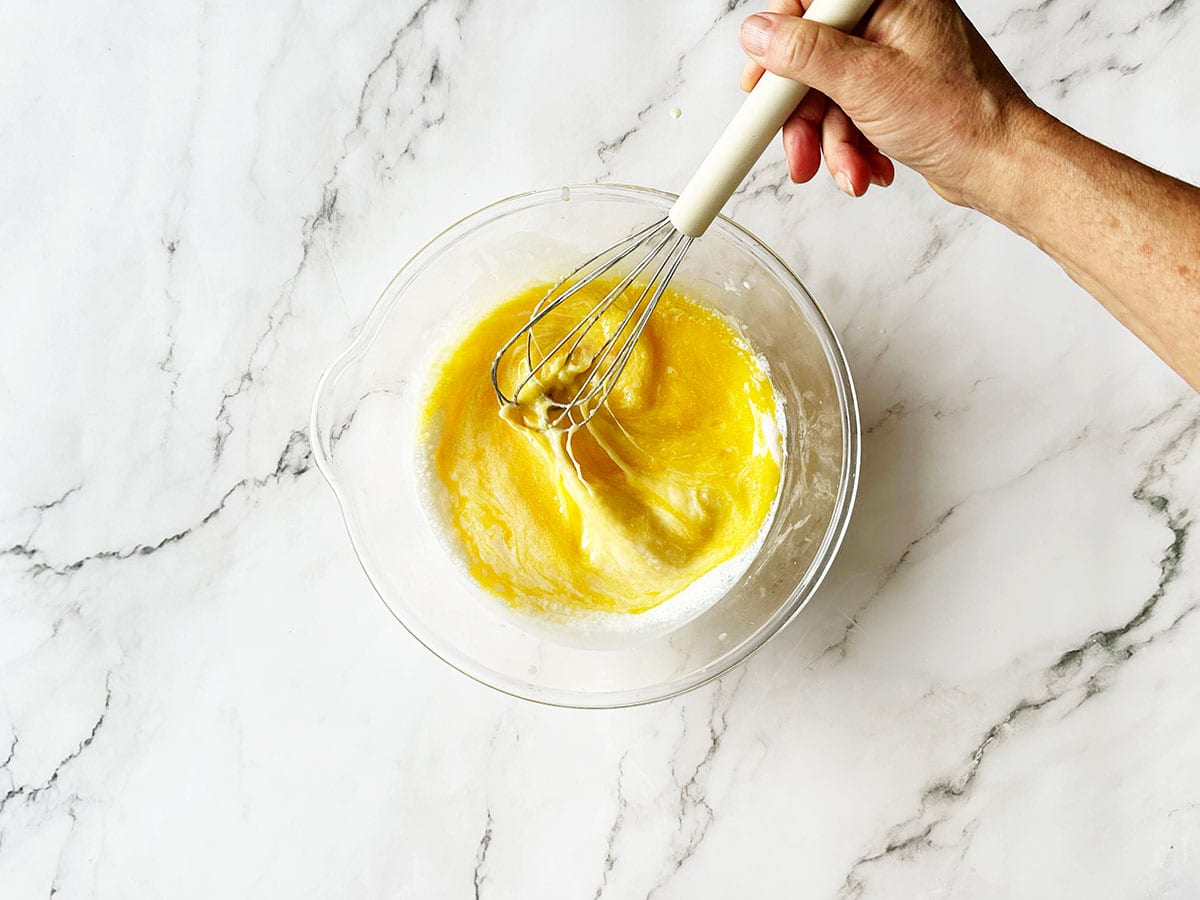
- Mix the wet ingredients. In a separate bowl or large jug, whisk together the wet ingredients until well combined.
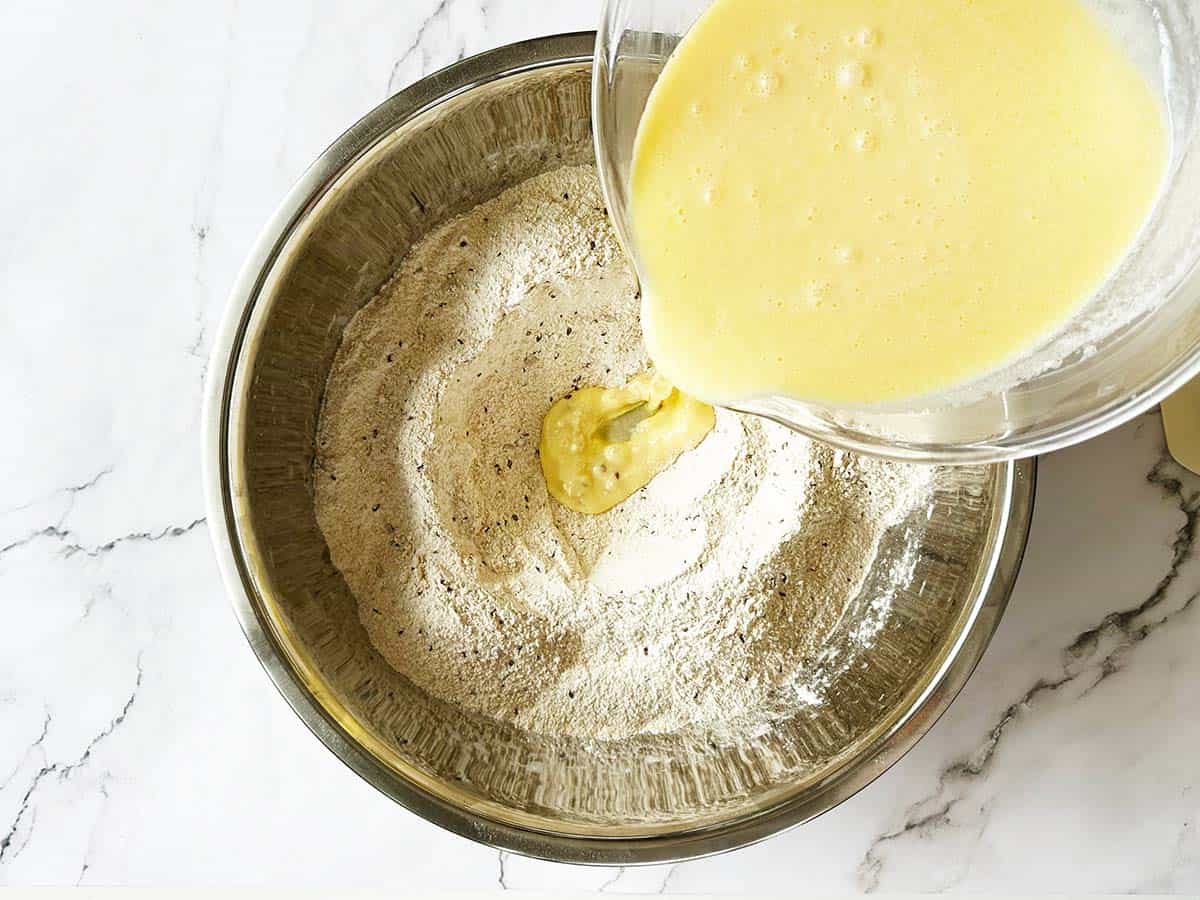
- Combine. Make a well in the centre of the dry ingredients. Pour in the wet mixture.
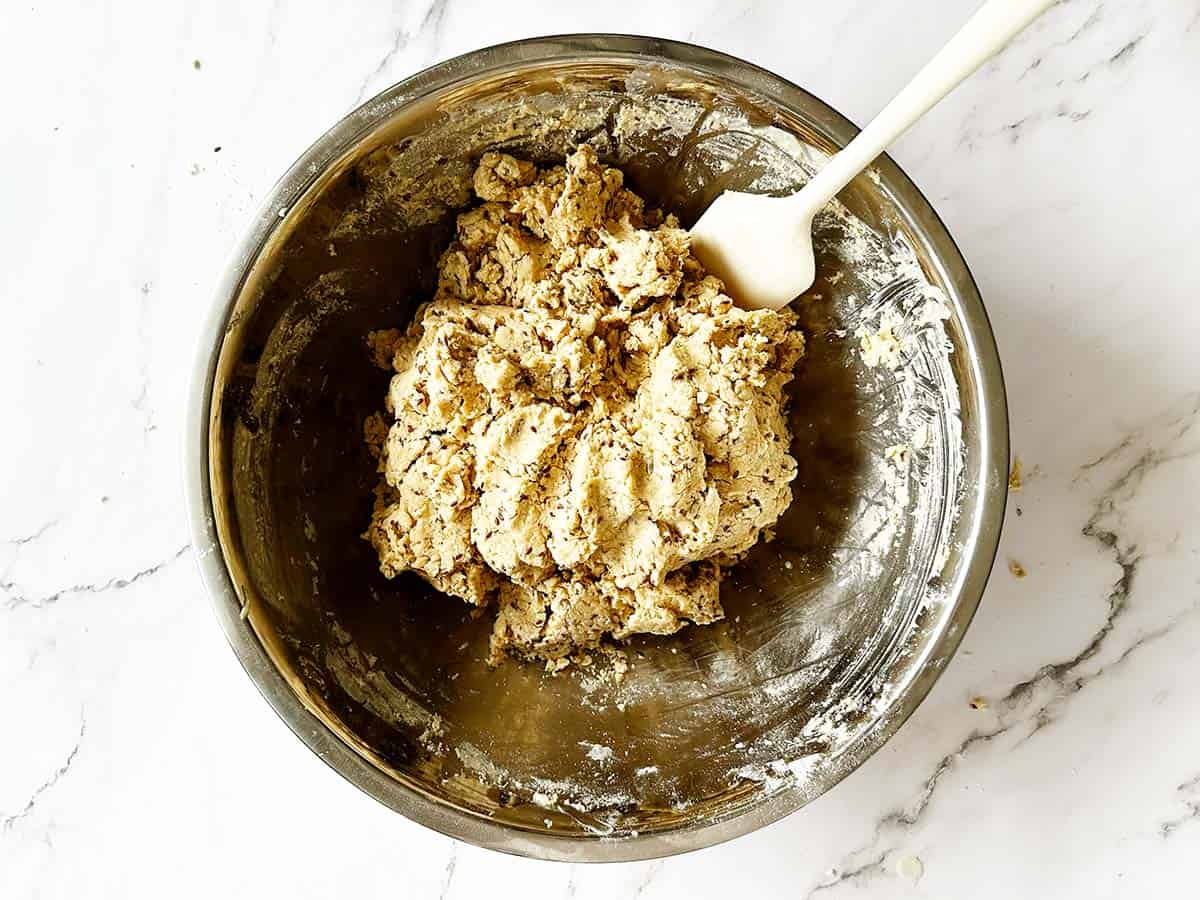
- Mix the dough: The dough will be thick and heavy. Don't over-mix. Once it comes together, it's easier to finish mixing gently with your hands.
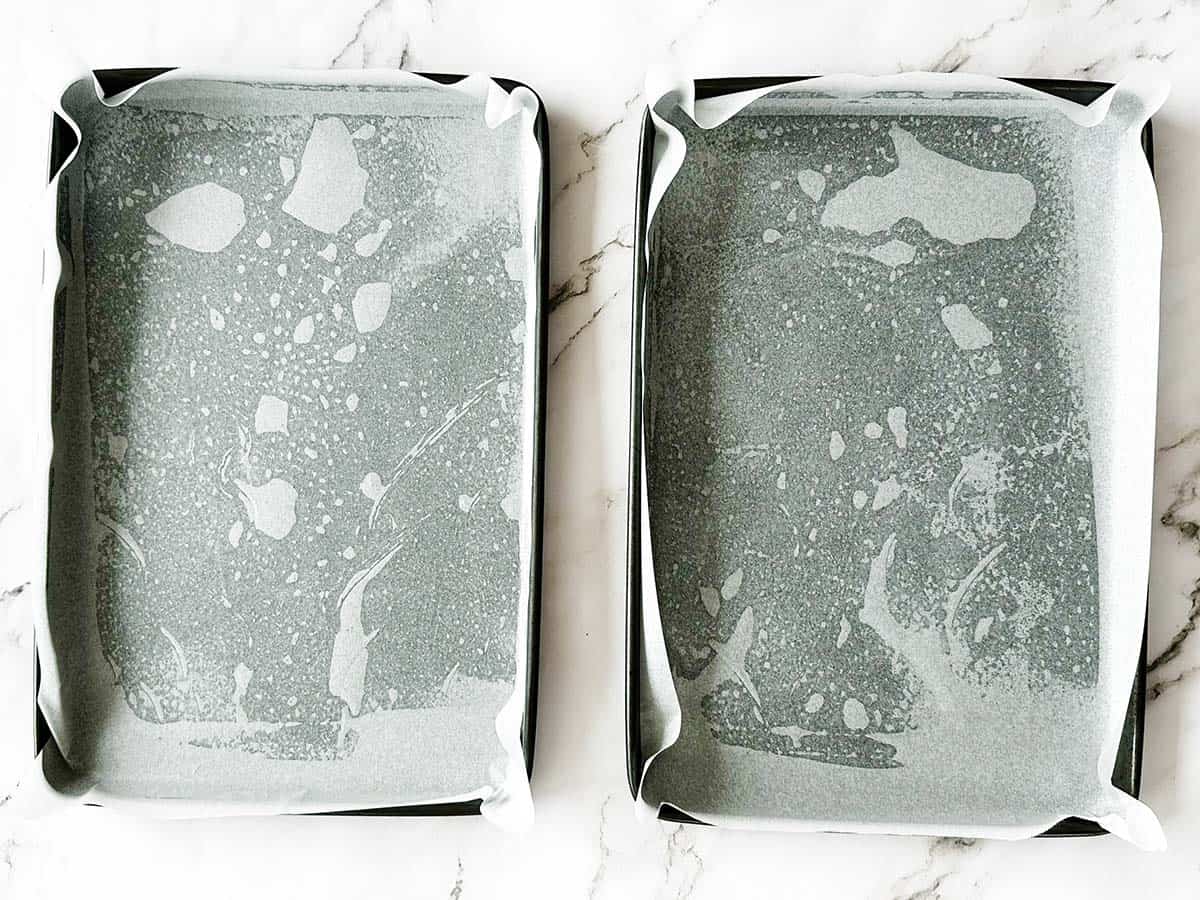
- Line the pans: Lightly grease the Swiss roll pans with oil, then press in baking paper so it sticks in place.
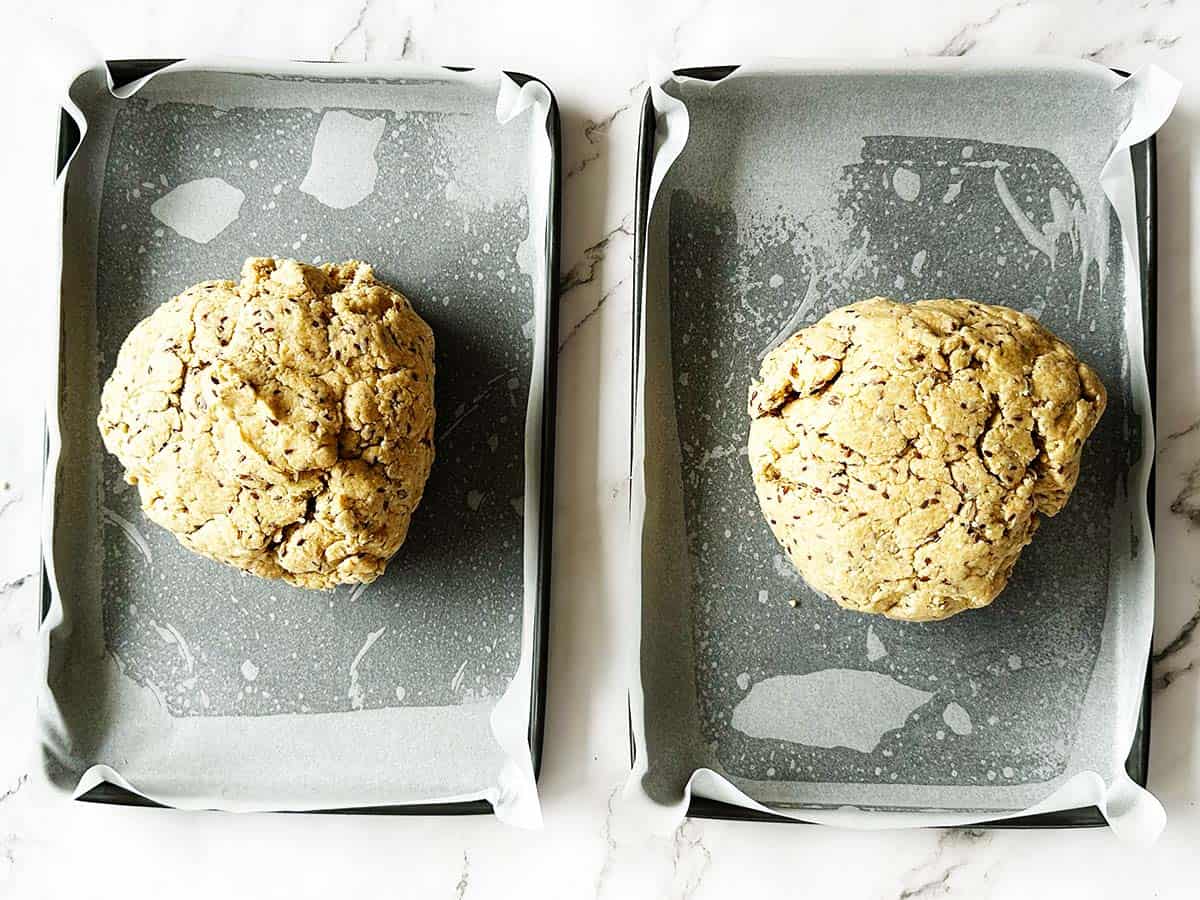
- Fill the pans. Divide the dough evenly between 2 greased and lined loaf pans (I use Swiss roll pans).
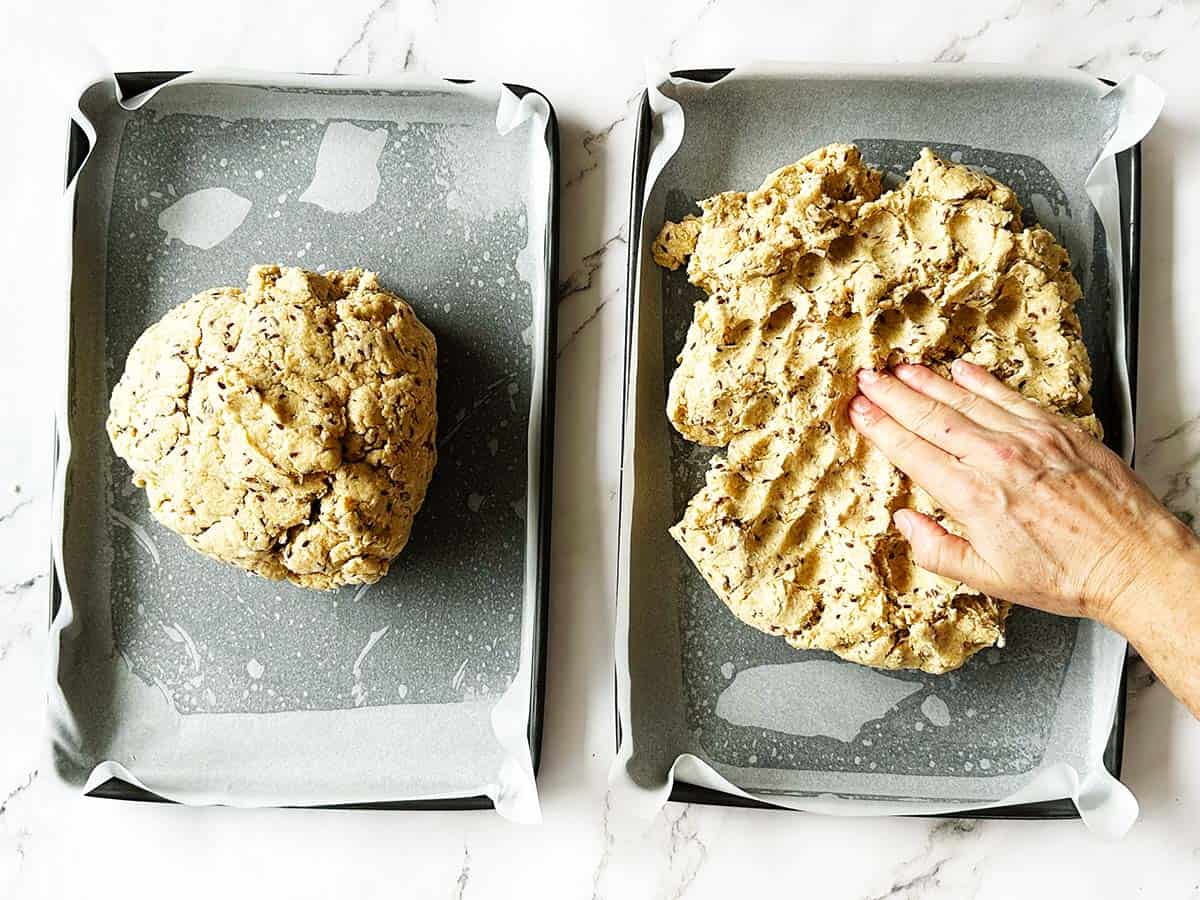
- Level: Press down gently so it's fairly even on top, but keep a light hand.
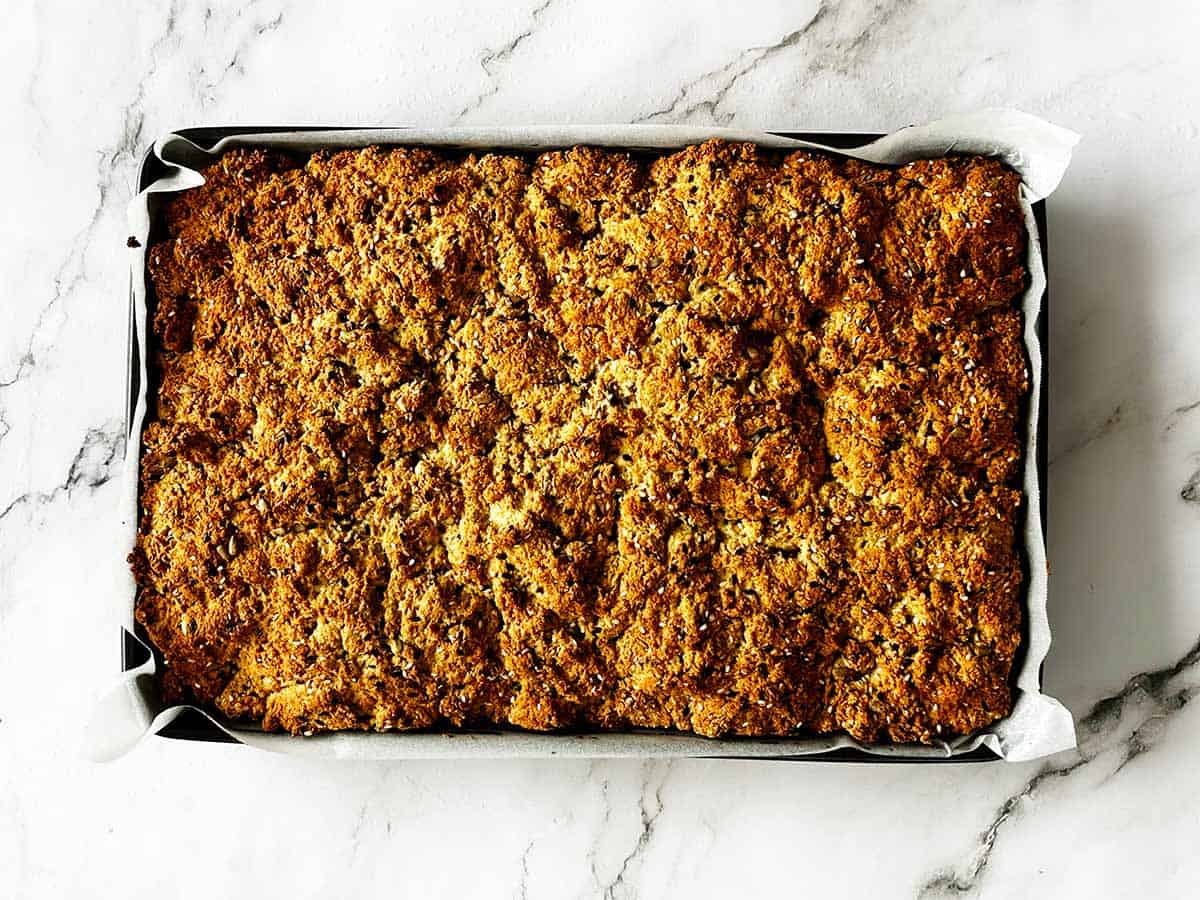
- Bake. 160°C (320°F) fan-forced for 45 minutes, or until a skewer comes out clean and the tops are golden brown.
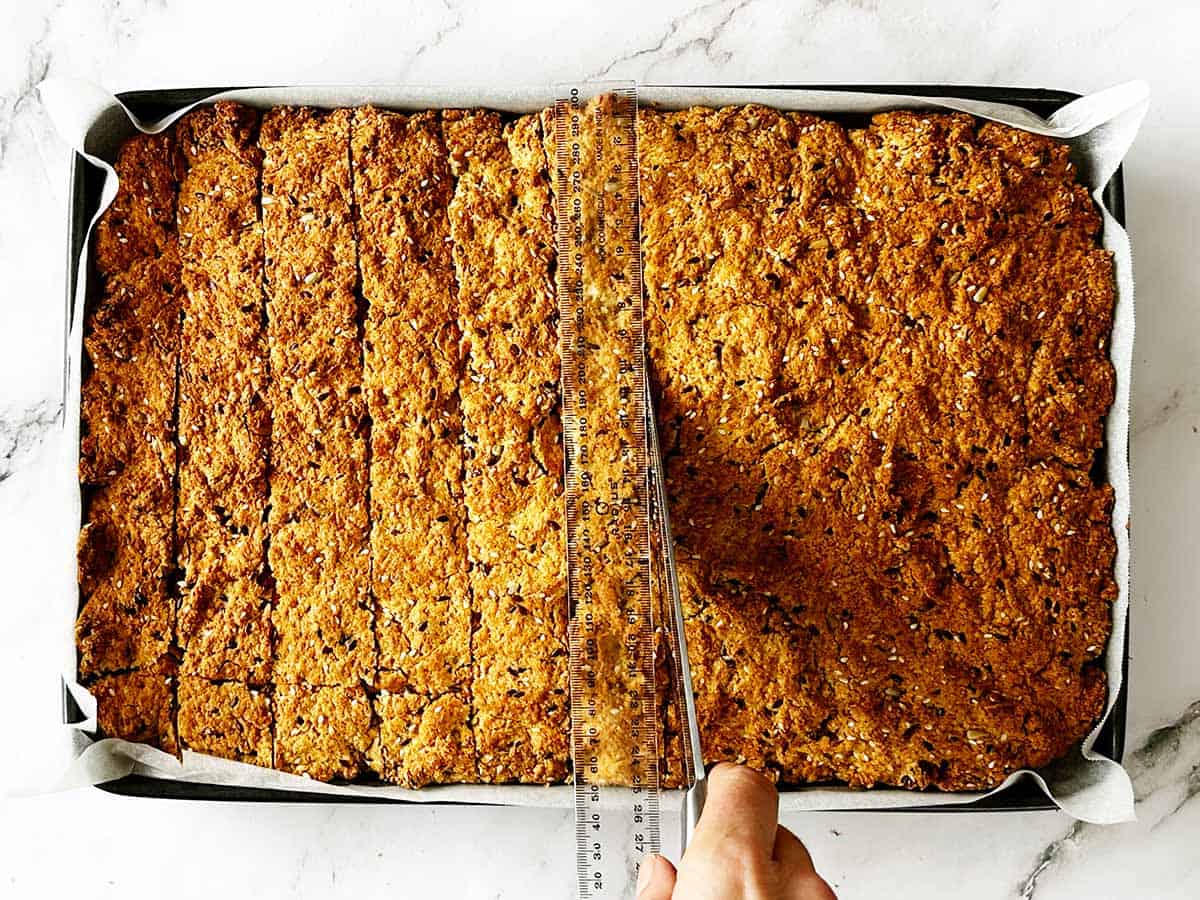
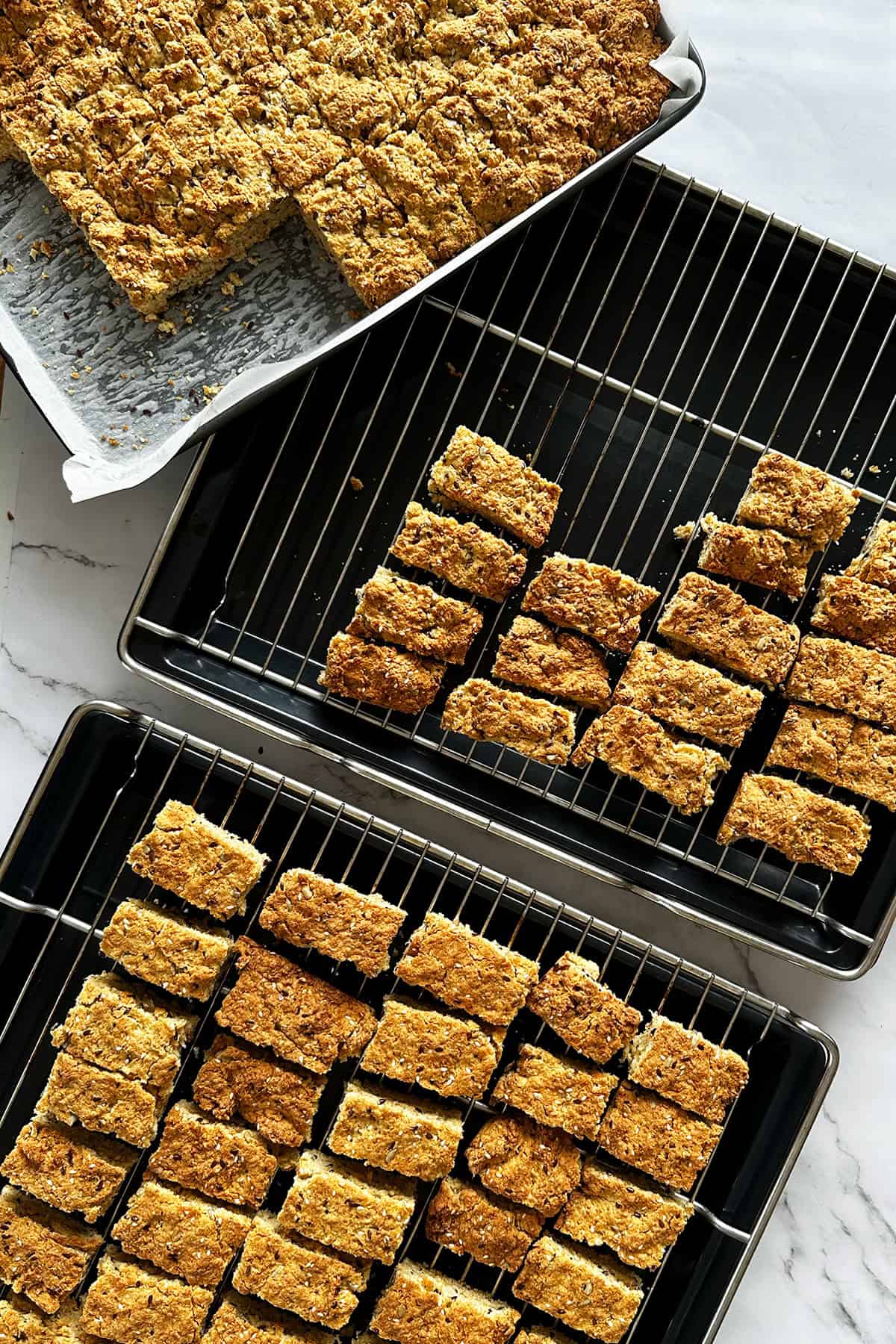
- Cool and cut. Let the baked slab cool in the pan until firm enough to handle. Using a ruler as a guide, make your first set of straight cuts in one direction, spacing them about 4 cm (1.5 inches) apart.
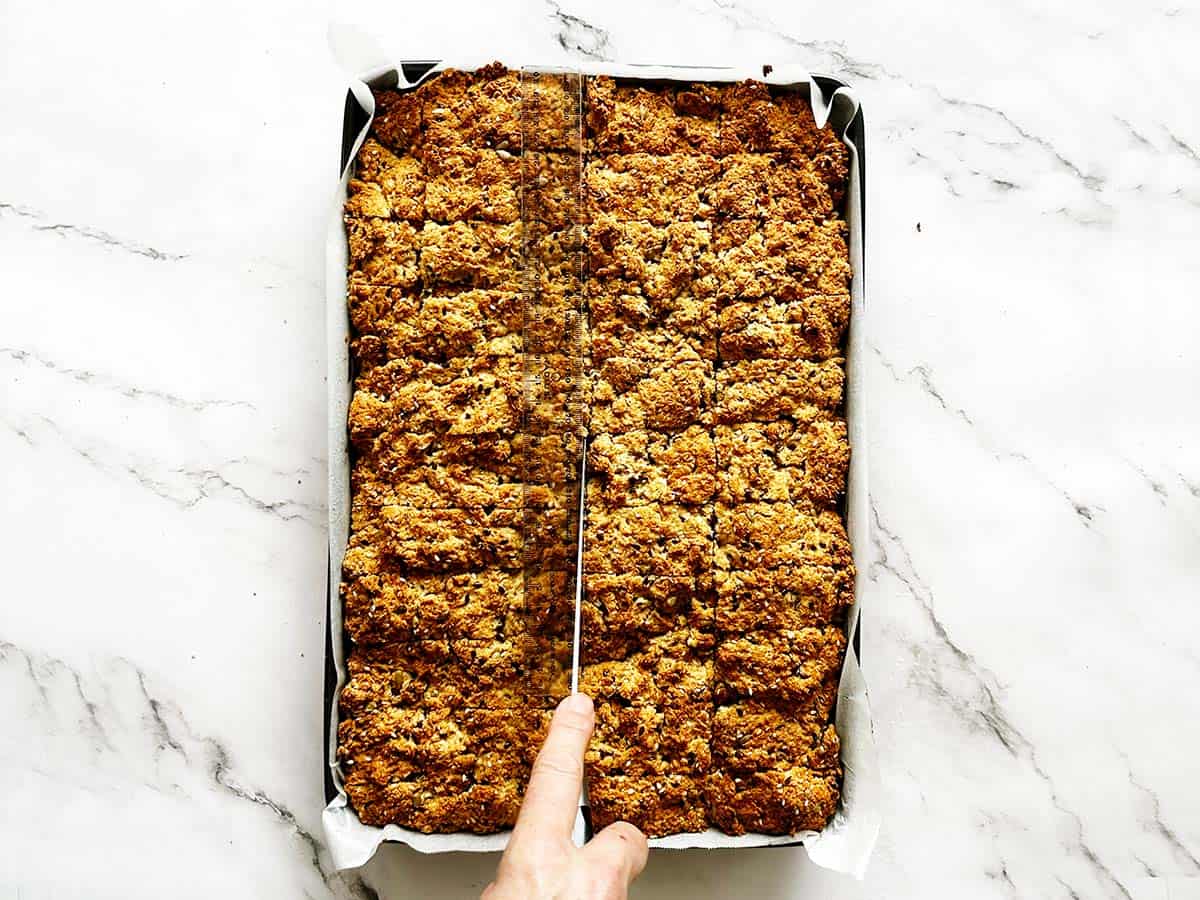
- Second cut. Turn the pan and cut in the opposite direction to form even pieces, about 6 cm (2.5 inches) long. Use a sharp knife, bread knife, or an electric knife for clean, even cuts.
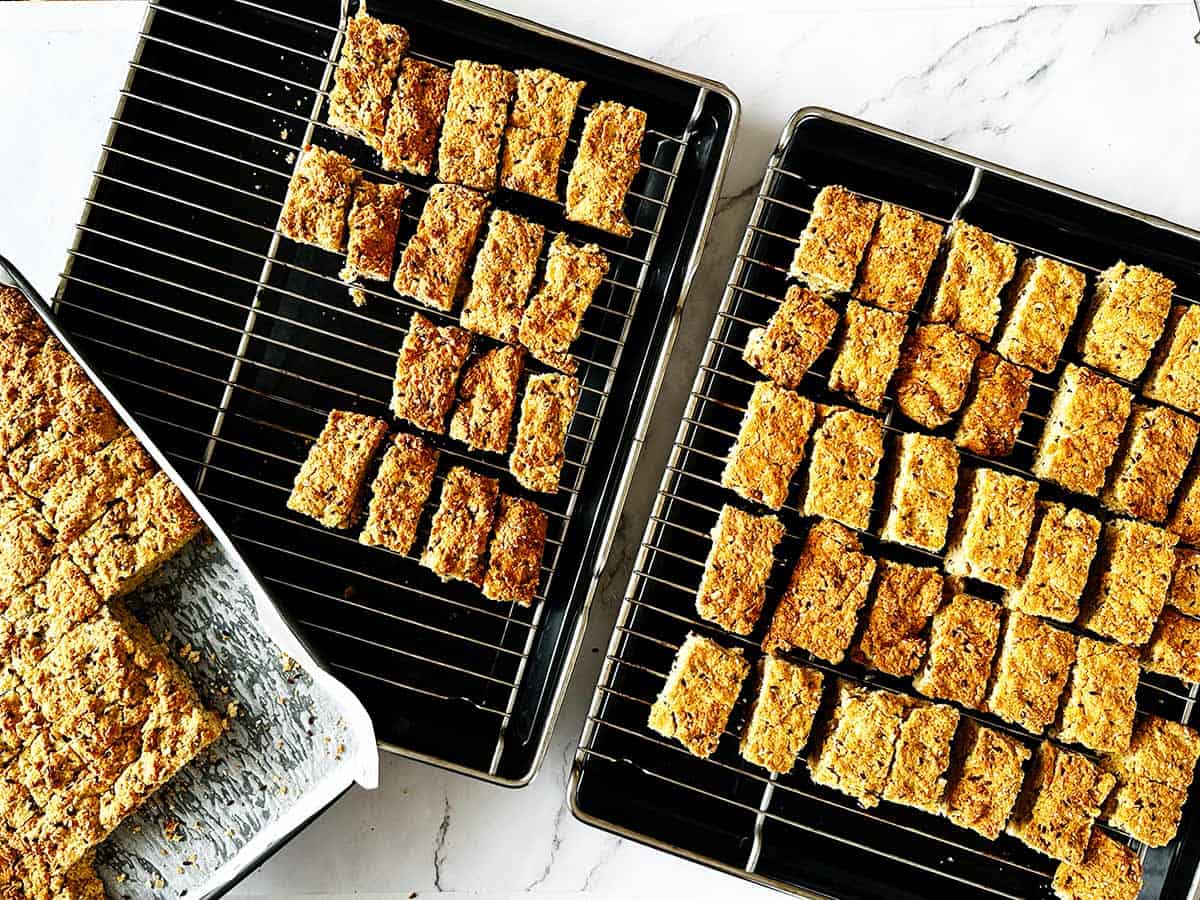
- Prepare to dry: Arrange the cut rusks on oven racks, leaving space between each one for air to flow.
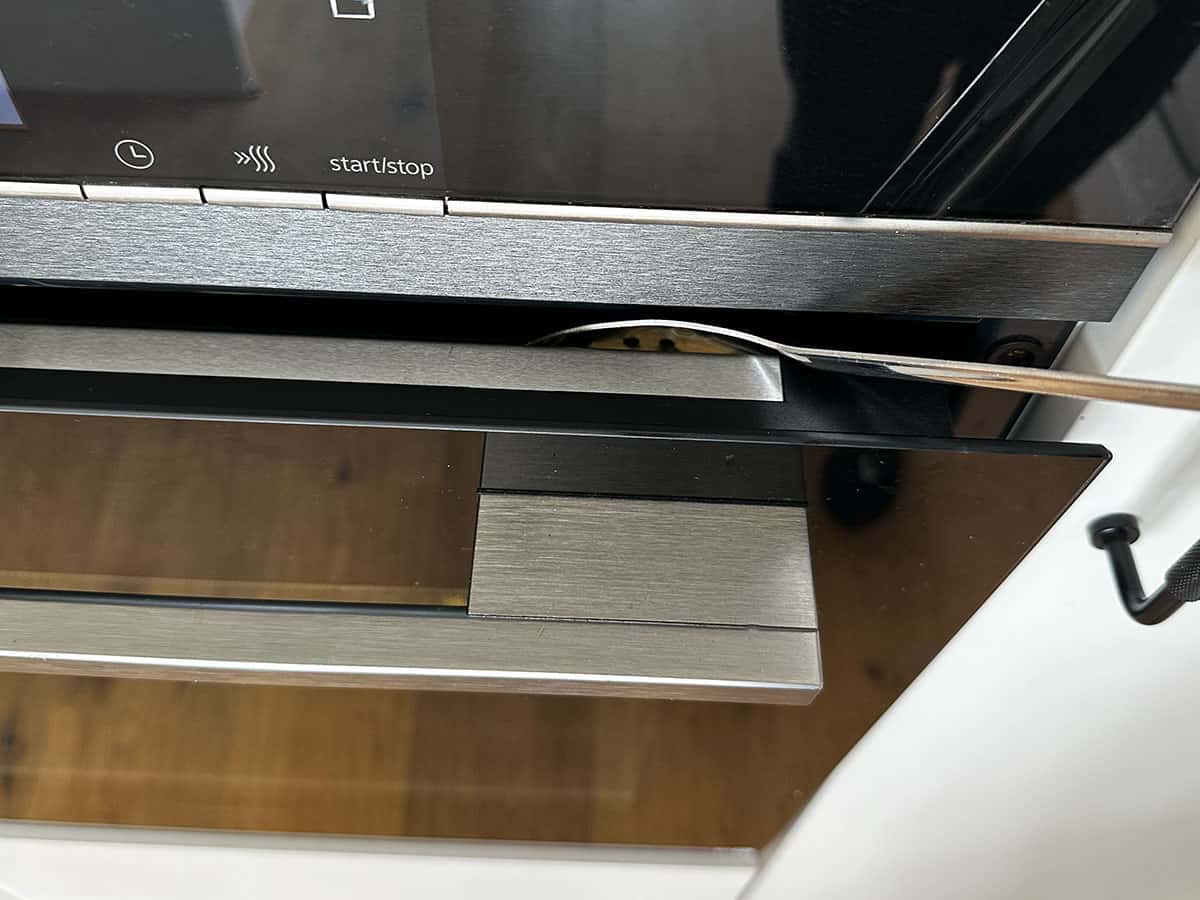
- Dry: Use the drying setting, or dry at 80°C with the oven door propped open with a wooden or metal spoon.
Substitutions
You can swap any one of the three seeds for something else - the recipe is flexible. Just keep the total amount the same (125 ml (½ cup) per swap).
- Don't have one of the seeds?
Replace it with desiccated coconut, raisins, dried fruit cake mix, or pumpkin seeds (pepitas). Each gives a different result - coconut adds a slight sweetness, raisins make it more of a fruity rusk, and pumpkin seeds keep it in the seed family. - Want fewer seeds overall?
You can replace one seed portion with desiccated coconut for a lighter, less seedy rusk. - No wholewheat flour?
Swap in the same amount of regular cake flour. You'll lose the brown colour and nutty flavour, but the rusks will still work - closer to a classic mixed seed rusk recipe with a lighter crumb. - Want to skip the bran?
Increase the wholewheat flour to 500 ml (2 cups). Smoother texture but you'll keep the wholegrain benefits. - Pre-mixed seed blend from the health shop?
You can use one, but check the ratio - some are heavy on one seed type. Use 375 ml (1½ cups) and total to replace the three individual seed measurements.
Four seeds variation
To make the full four seed rusk recipe, add 60g (2 ounces) of poppy seeds to the dry ingredients along with the other seeds. Poppy seeds are tiny, so they settle into the dough differently - you'll get little pops of crunch rather than the bigger bite of sunflower seeds.
Everything else stays the same. It's a small addition that adds another layer of texture to an already nutty seed rusk.
Equipment
You don't need anything fancy to make great rusks, especially if you're outside South Africa.
- As an expat, I don't have access to rusk pans, so I use a standard Swiss roll pan (jelly roll pan) lined with baking paper. It works beautifully and gives you the same even bake.
- Once baked, I simply use a ruler and a bread knife to portion the rusks before the drying stage. It's quick, practical, and gives you nice uniform pieces without any special tools.
- However, an electric knife gives cleaner, more even cuts than a bread knife.
- Use the oven rack (oven shelf) as your drying rack, placing a baking tray (sheet pan) underneath to catch crumbs.
Yes, you can find proper rusk pans and cutters at some South African shops, but they're not essential at all. This is one of those recipes that works just as well the old-fashioned way, simple, adaptable, and very forgiving.
Storage
- Keeps for up to 4 weeks in an airtight container at room temperature.
- Make sure they're completely dry before storing - any residual moisture and they'll go soft or develop mould.
- If you live somewhere humid, pop a silica gel packet in the container.
Top Tips
- Don't over-mix the dough. A gentle mix is what gives you crunchy seed rusks. Overmixing makes them a bit more dense - some people like it that way, but the classic way is a light hand. I make it like my mum did.
- Don't press the dough too hard into the pans. Same idea - keep it light for a crunchier result.
- Cool before cutting. Trying to cut warm loaves is harder and gives you crumbly, uneven slices. My mum used an electric knife to cut rusks - I don't have one, so a bread knife does the job. Just make sure it's cooled down first.
- Cut to a size that works for you. I find about 6x4 cm (1.5 x 2.5 inches) works well. I use a ruler more to keep the line straight than to actually measure - just go by eye.
- Oven drying options. If your oven has a drying setting, use it at 80°C for 6-8 hours. If it doesn't, use 80°C fan forced with the door left slightly open (prop it with a wooden spoon). Keep an eye on them so they don't brown.
- Space them out on the rack. Arrange the rusks on oven racks with a little gap between each one so air can flow around them. This is what dries them evenly.
- If you want bigger batches, it's better to make one batch at a time rather than doubling the recipe. Mixing a huge amount of dough properly becomes difficult.
More South African rusk recipes
If you've made these seed rusks and want to explore more of the rusk family, here's what's on the way and what's already on the site. I'll be adding these classic variations over the next few months, so come back and try them all.
- All Bran Rusks: the cereal-based bran rusk made with All-Bran flakes and buttermilk. The other half of the bran rusk story. (Live now)
- Buttermilk Rusks: the South African rusk. Buttery, plain, and the foundation every other variation builds on. (Coming soon)
- Condensed milk rusks: sweeter and softer, with that distinctive caramel note. (Coming soon)
- Muesli rusks: oats, seeds, and dried fruit packed into every batch. The healthy rusk most South Africans grew up on. (Coming soon)
- Aniseed rusks: distinctive liquorice flavour. A proper Boere tradition. (Coming soon)
- Fruit and nut rusks: packed with raisins, dried fruit, and nuts. (Coming soon)
- Mosbolletjies: twice-baked yeasted rusks with grape must. A Cape tradition. (Coming soon)
Looking for more South African recipes beyond rusks? My malva pudding and peppermint crisp tart are two of the most popular desserts on the site. For something savoury, bobotie is a great place to start.
FAQ
They are. You're getting more fibre, healthy fats, and protein from the seeds, bran, and wholewheat flour. If you're after a South African health rusk recipe or a brown rusk recipe that's a step up from the classic white version, this is a solid option. But they still have butter and sugar, so "healthy" is relative - a better option, but still a treat.
The combination of wholewheat flour, bran, and three different seeds means you're getting fibre, omega-3 from the linseed, and good fats from the sunflower and sesame seeds. It's an easy health rusk recipe that doesn't compromise on taste. If you want it even lighter on sugar, drop it to 200 ml.
Increase your sunflower or sesame seeds to make up the 125 ml, or swap in pumpkin seeds. You could also use desiccated coconut or raisins for a different flavour altogether.
Yes. Use a large rectangular baking tray and press the dough into a slab about 3-4 cm thick. Score the top into rusk-sized pieces before baking so they're easier to break apart afterwards. Baking time stays roughly the same.
Once fully dried, there's no real need to - they keep for weeks at room temperature. But if you want to freeze the baked loaves before drying, wrap them tightly in cling film and freeze for up to 3 months. Thaw, cut, and dry as normal.
If you give these a go, I'd love to hear how it turned out. Drop a comment or leave a rating below - and let me know if you went with three seeds or four.
Related
These brown rusks are perfect with coffee, but if you're after a proper dessert moment, here are a few South African favourites:

Seed Rusks (Healthy Wholewheat Brown Rusk Recipe)
- Total Time: 8 hours
- Yield: 80 1x
Description
Crunchy, nutty South African seed rusks packed with bran and seeds. Perfect for dunking into coffee or tea with that classic crisp bite.
Ingredients
Dry Ingredients
8 cups (1 kg) self-raising flour
1 cup (250 ml) sugar
2 cups (500 ml) wheat bran
1 cup (250 ml) wholemeal flour
½ cup (120 ml) sesame seeds
½ cup (120 ml) linseeds
½ cup (120 ml) sunflower seeds
1 tablespoon (15 ml) baking powder
1 teaspoon (5 ml) salt
Wet Ingredients
2 large eggs
2 ½ cups (620 ml) buttermilk
1 ¾ cups (400 g) butter, melted
 Get Recipe Ingredients
Instructions
- Preheat oven: Preheat oven to 160°C (320°F) fan-forced.
- Mix dry ingredients: Combine all dry ingredients in a large bowl. Mix until seeds are evenly distributed.
- Mix wet ingredients: In a separate bowl, whisk eggs, buttermilk, and melted butter until smooth.
- Combine: Make a well in the dry ingredients and pour in the wet mixture. Stir gently to bring it together.
- Mix dough: Mix until just combined. Finish gently with your hands, dough will be thick and heavy. Don't over mix. (note 1 and 7)
- Prepare pans: Lightly grease 2 Swiss roll pans and line with baking paper. Divide dough evenly and press lightly using your hands or back of a wooden spoon to level. (note 2)
- Bake: Bake at 160°C (320°F) fan-forced for 45 minutes, until golden and a skewer comes out clean.
- Cool and cut: Cool in the pan until firm. Cut into pieces about 1.5 x 2.5 inches (4 x 6 cm). (note 3 and 4)
- Prepare to dry: Arrange rusks on oven racks with space between each one. Place a tray underneath to catch crumbs. (note 6)
- Dry: Dry at 80°C (175°F) fan-forced using a drying setting for 6-8 hours, or at 80°C (175°F) with the oven door propped open with a wooden spoon. Keep an eye on them - you don't want them to brown, just dry out completely. (note 5)
- Serve: Cool completely and store in an airtight container. (note 5)
Notes
- Don't overmix: A light mix gives a crunchier rusk. Overmixing makes them dense.
- Press lightly: Avoid compacting the dough too much when filling the pans.
- Cool before cutting: Cutting warm loaves can cause crumbling. Use a bread knife or electric knife for clean slices.
- Cut size: Around 4 x 6 cm (1.5 x 2.5 inches) works well, but adjust to your preference. Use a ruler if you want neat, even lines.
- Drying tip: Proper drying is key, the centre must be fully dry or they will go soft in storage. Snap one in half to check - if there's any soft spot in the middle, give them more time.
- Space matters: Leave gaps between rusks while drying so air can circulate evenly.
- Batch size: For best results, avoid doubling the recipe, large batches are harder to mix evenly.
- Prep Time: 20
- Drying time: 415
- Cook Time: 45
- Category: Baking
- Method: Oven
- Cuisine: South African
Nutrition
- Serving Size:
- Calories: 121
- Sugar: 2.9 g
- Sodium: 189.2 mg
- Fat: 6 g
- Carbohydrates: 15.1 g
- Fiber: 1.5 g
- Protein: 2.6 g
- Cholesterol: 16.2 mg
Very authentic 😋
Making this and the whole house smells like beskuit.